Douro Valley Hiking Tours Guided Vineyard Walks and Trail Routes
Trade the van seat for a trail. Hike terraced vineyards with a local guide, end at river-view wineries for tastings and lunch, and let transfers, routes and estate access be handled for you. Pick your route today and walk the Douro the way it was built, on foot.
"Pedro and his colleague were so kind and accommodating. We arrived late and they stayed flexible. Gorgeous views and a lovely picnic to finish. Perfect for seeing the quieter, less touristy Douro Valley."
Four ways to walk the valley: a half-day guided hike to ruins and river viewpoints, a gentle vineyard trail that ends in an estate lunch, and two all-inclusive walking journeys of three and five days. The one decision that sorts them: how many days you can give the trail.
FitnessA reasonable level of fitness is enough for most trails here, since climbs are steady and gradual on terraced or dirt paths, with no technical mountain terrain.
TerrainWalking up from the river basin into the hill villages is a strenuous climb, and an uphill trek takes nearly double the time of the descent.
FootwearBring sturdy walking shoes with good grip for the steep, uneven, stony ground around the vineyard terraces.
GuidesVineyard tracks cross private wine estates that admit booked visitors only, and waymarkers are painted on poles, rocks and fences, so a guide is the safe route through.
HeatSummer heatwaves reaching 42 degrees Celsius can force trails to close entirely, so walk early and carry water on hot days.
DocumentsAnyone aged 16 or older must carry official photo identification in public spaces in Portugal, and a driving licence does not count.
AgeThere is no universal minimum age for guided vineyard walks here; some hikes welcome children from 6 years old, while others require 12 or 14.
TimingThe multi-day journeys walk between 9:30 am and about 12:30 pm, then leave afternoons free to rest or explore.
CancellationEvery option on this page lets you cancel up to 24 hours in advance for a full refund.
Getting thereThe day-hike tours meet in the valley and the hikes start at Lugar do Esteval, so plan your own transport to the meeting point.
importantDouro Valley hikes involve steep, uneven schist terraces with little shade, and summer heatwaves can push temperatures past 40°C, forcing trails to be abandoned.
Wear sturdy walking shoes, start early to finish before the midday sun, carry water and sun protection, and pick an easy or moderate route that matches your fitness level.
Douro Valley hiking tours to compare and book
Day hike with ruins
3 - 5 hours·English, Portuguese
5.0(3)
Douro Valley: Guided Hikes with Ruins & River Views
Three routes from 4 to 9 km, easy to moderate, with the Lagares do Cíbio ruins, river viewpoints and a picnic included.
Free cancellationLocal guideWalking route through Cotas
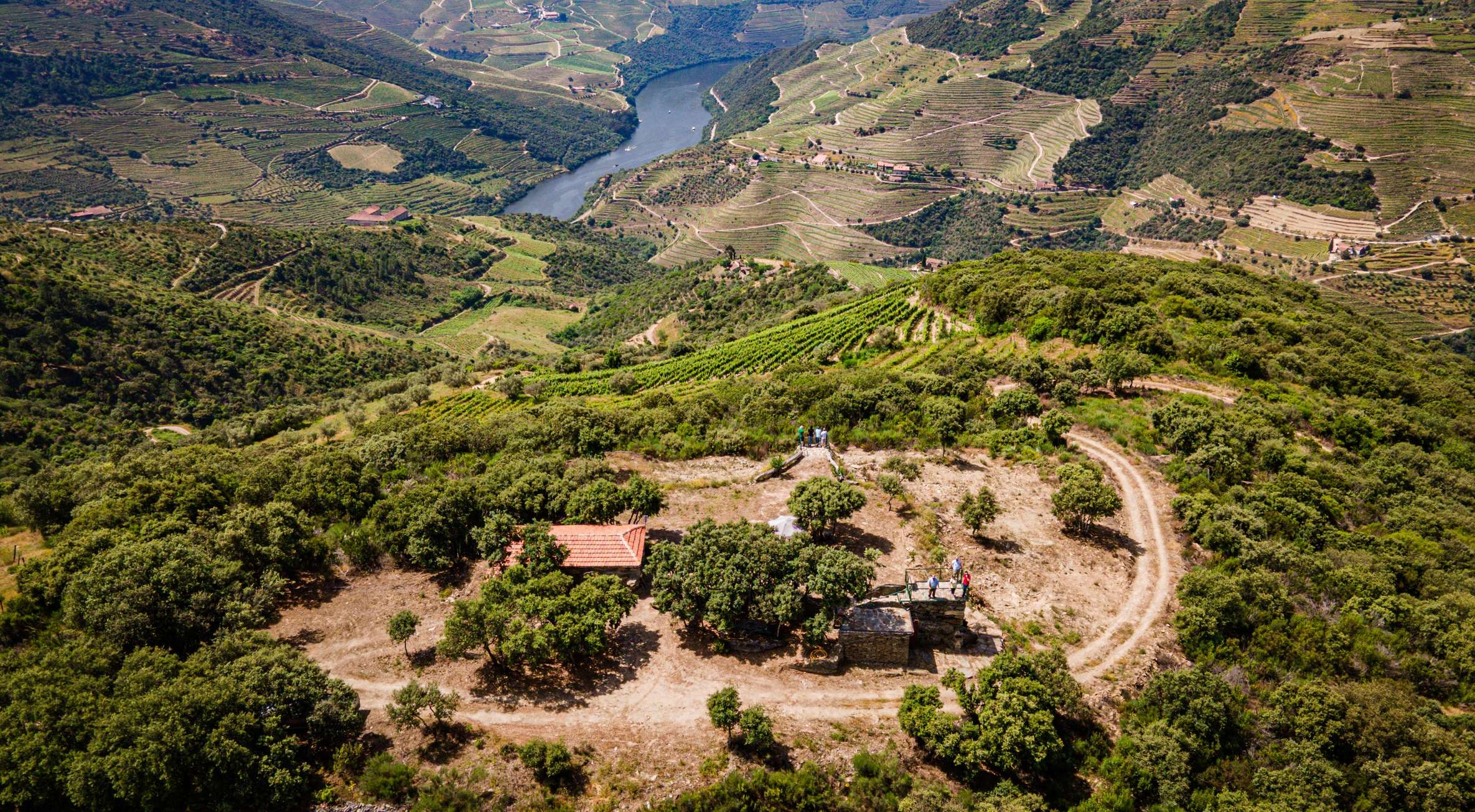
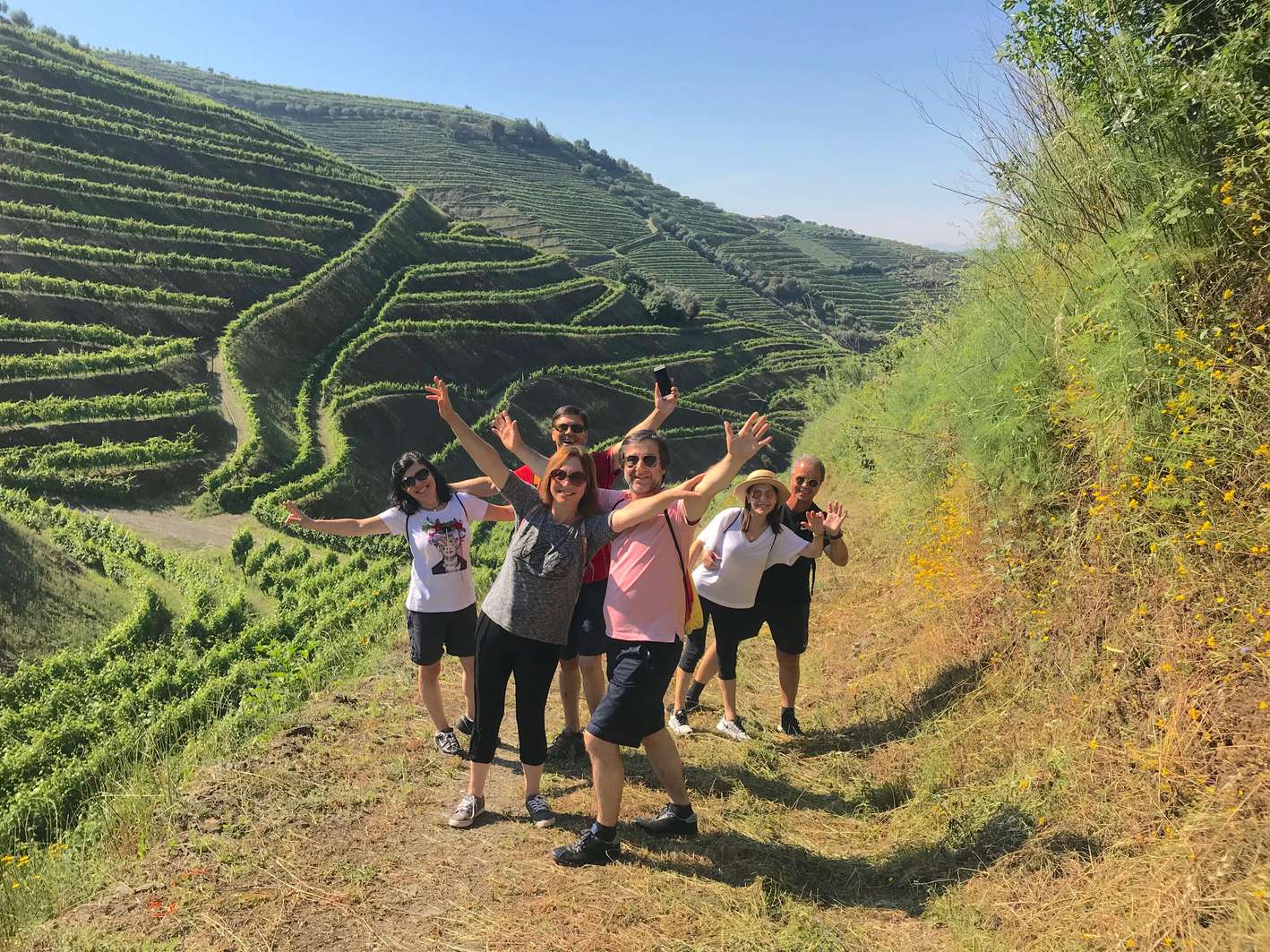
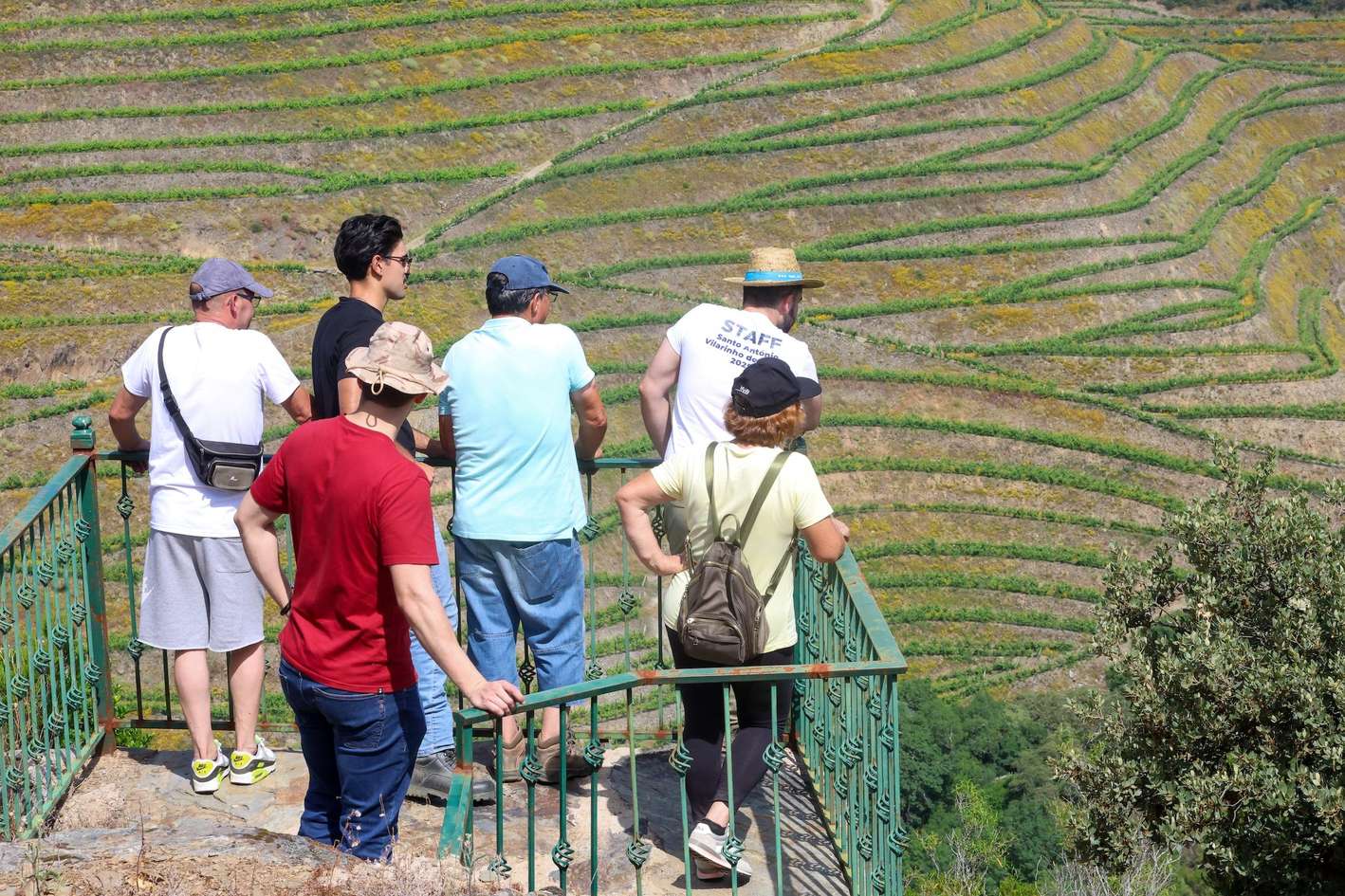
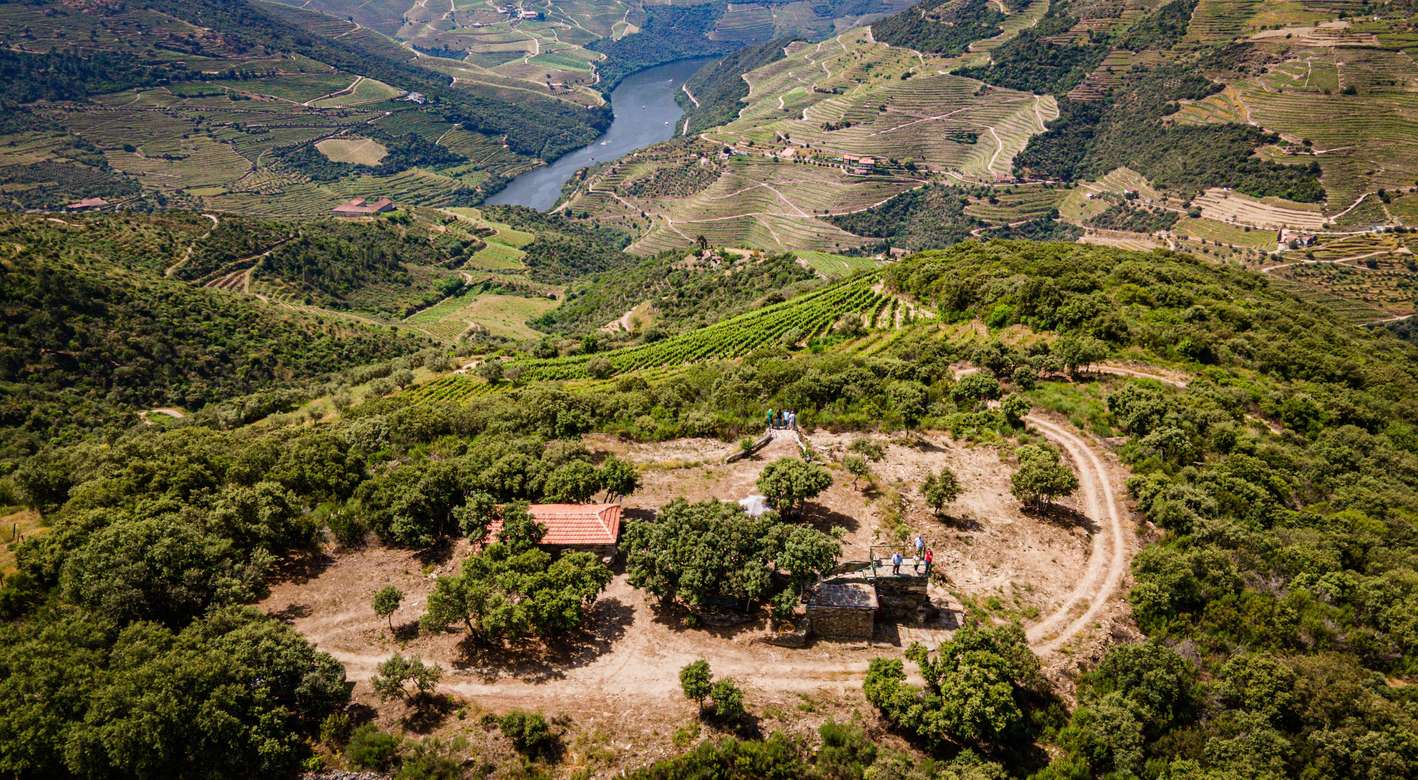
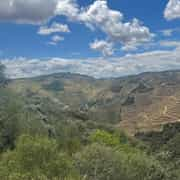
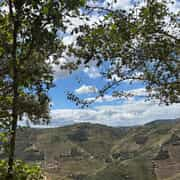
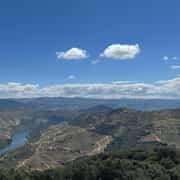
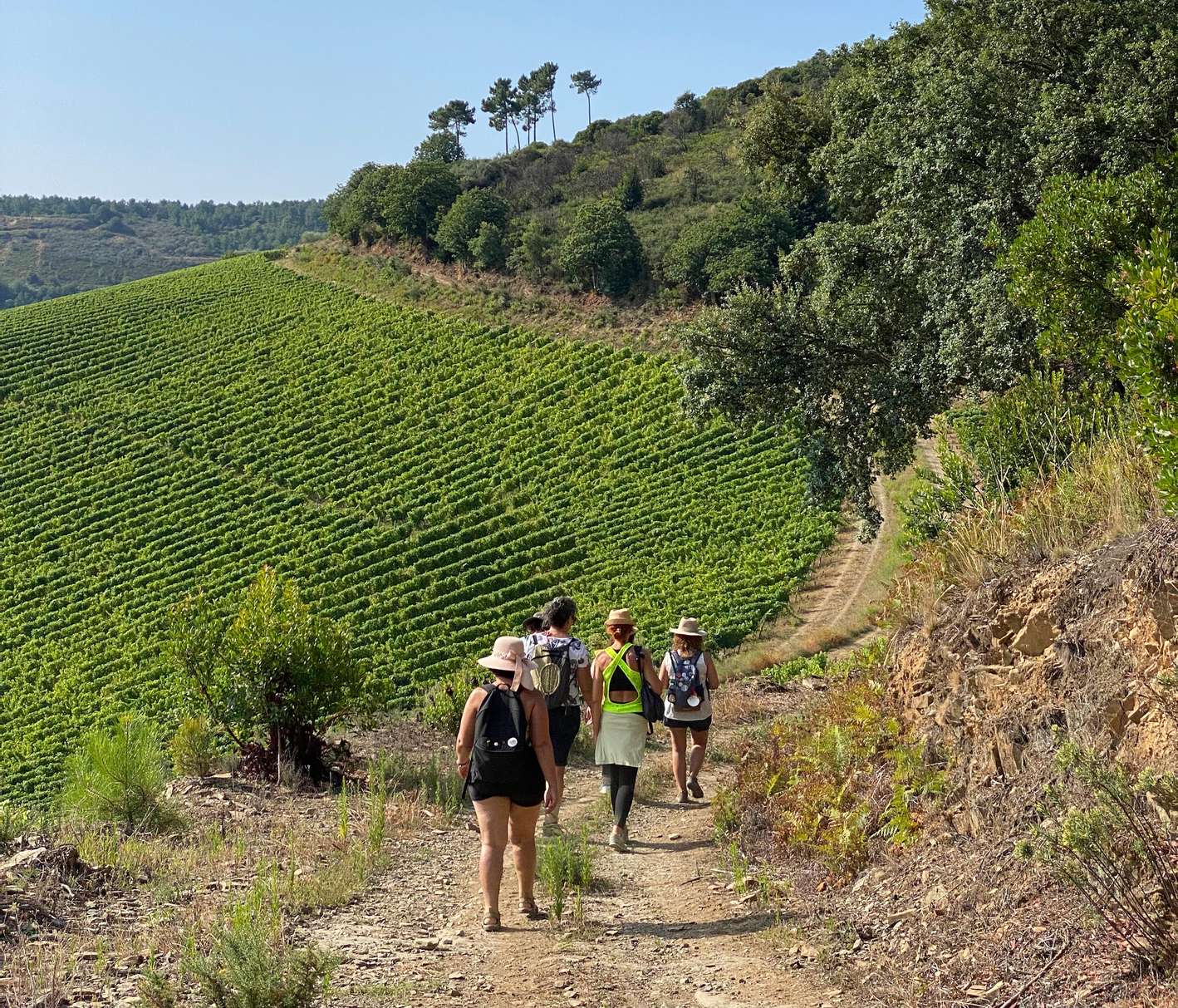
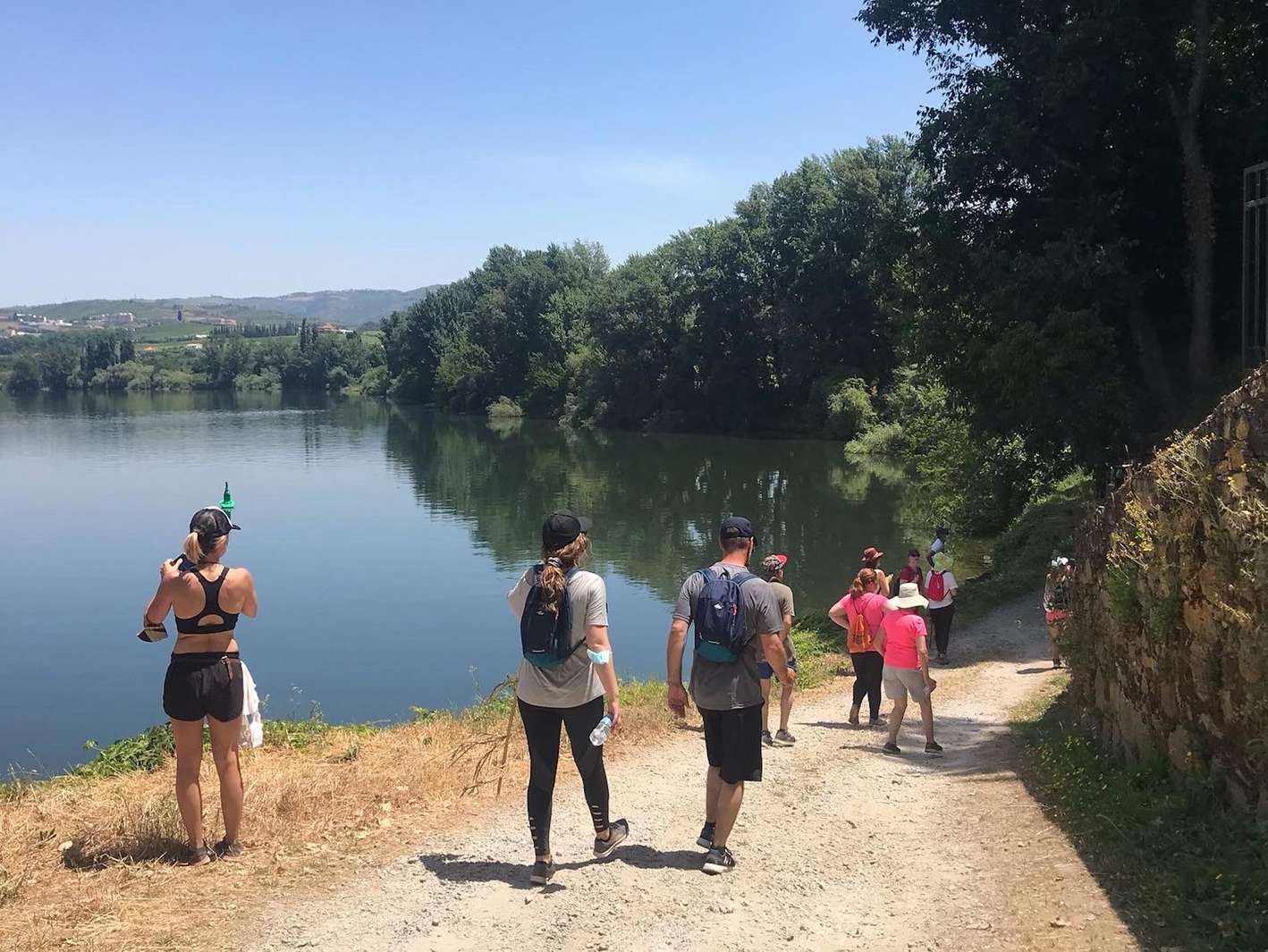
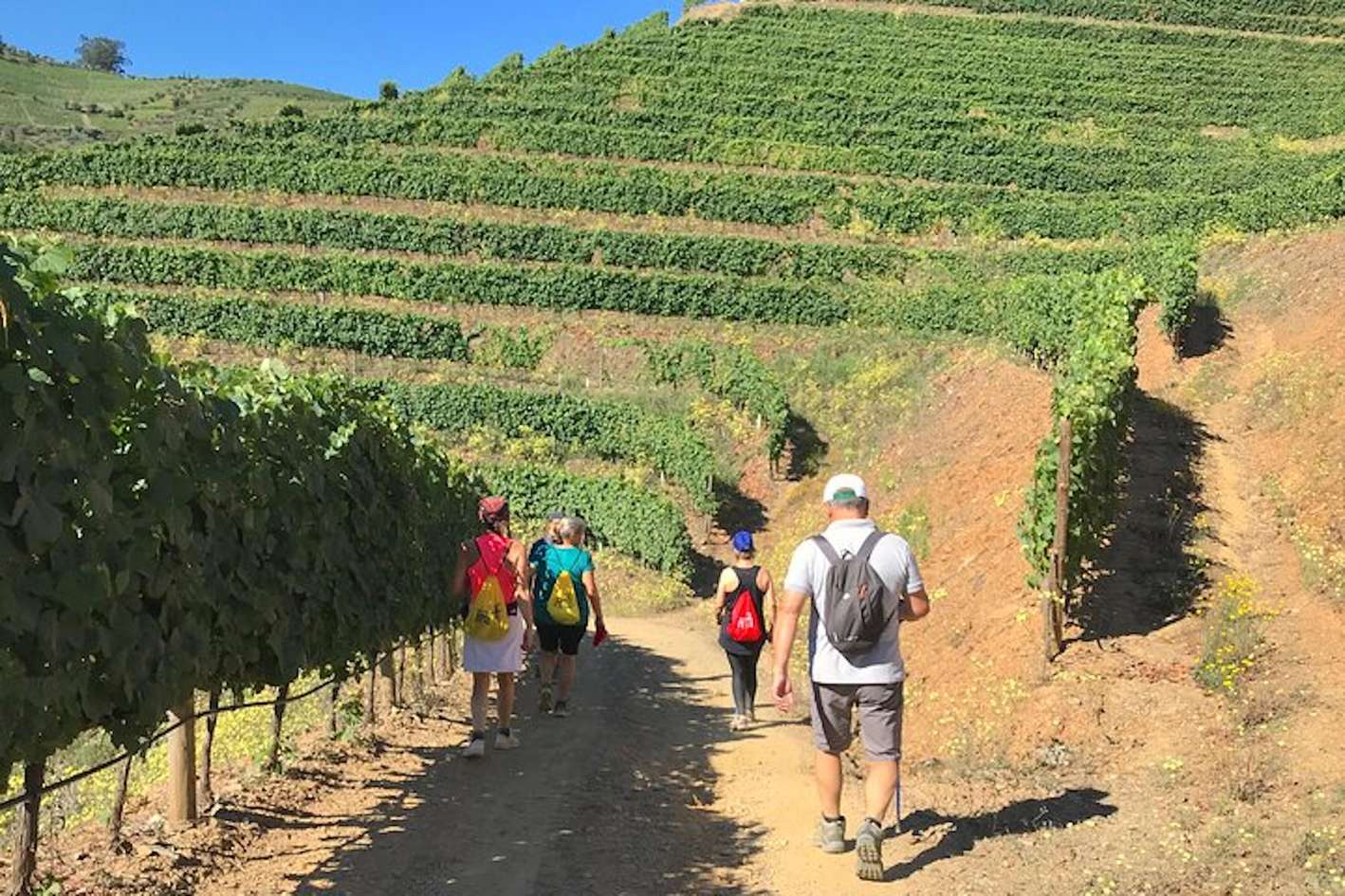
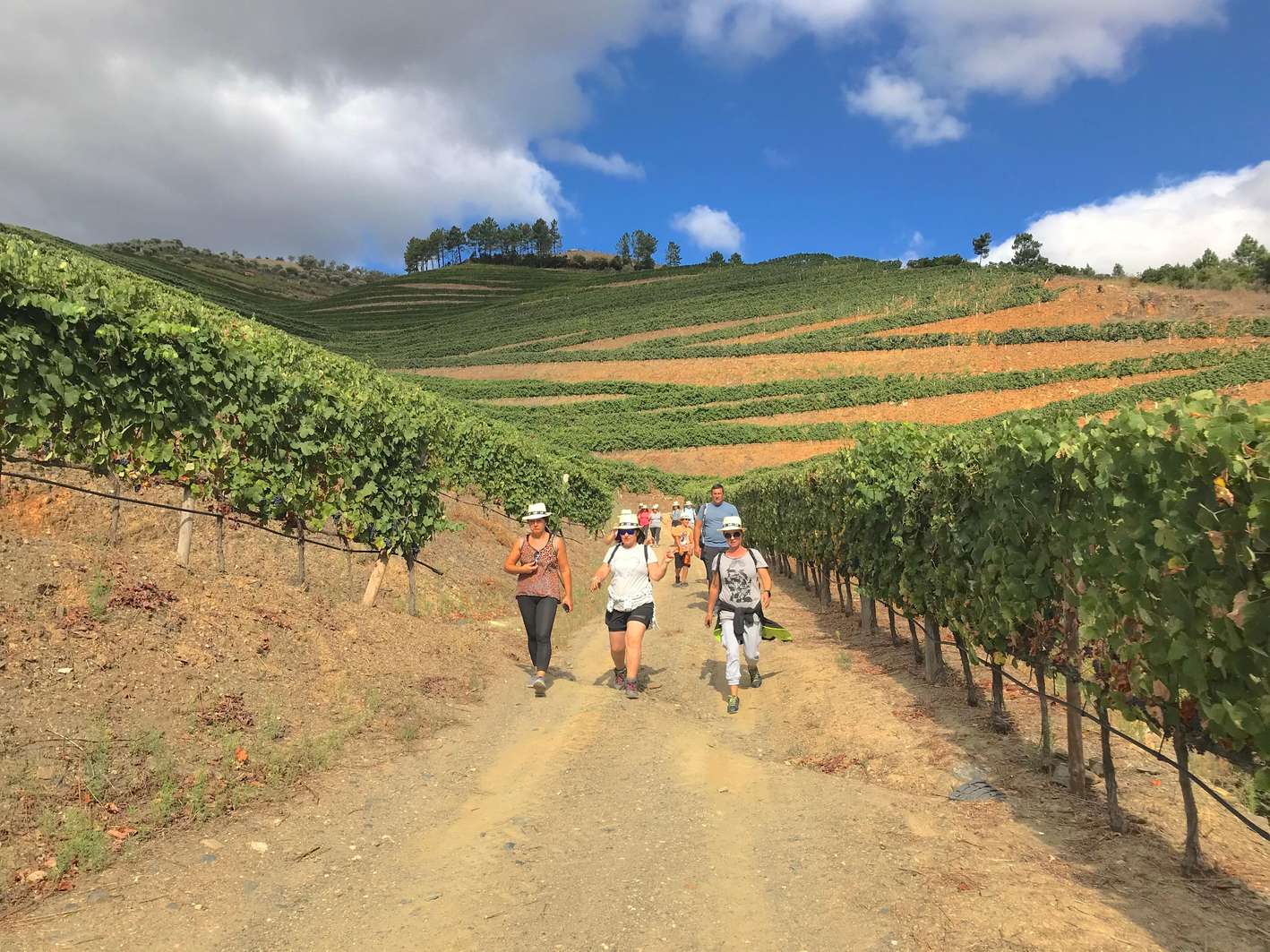
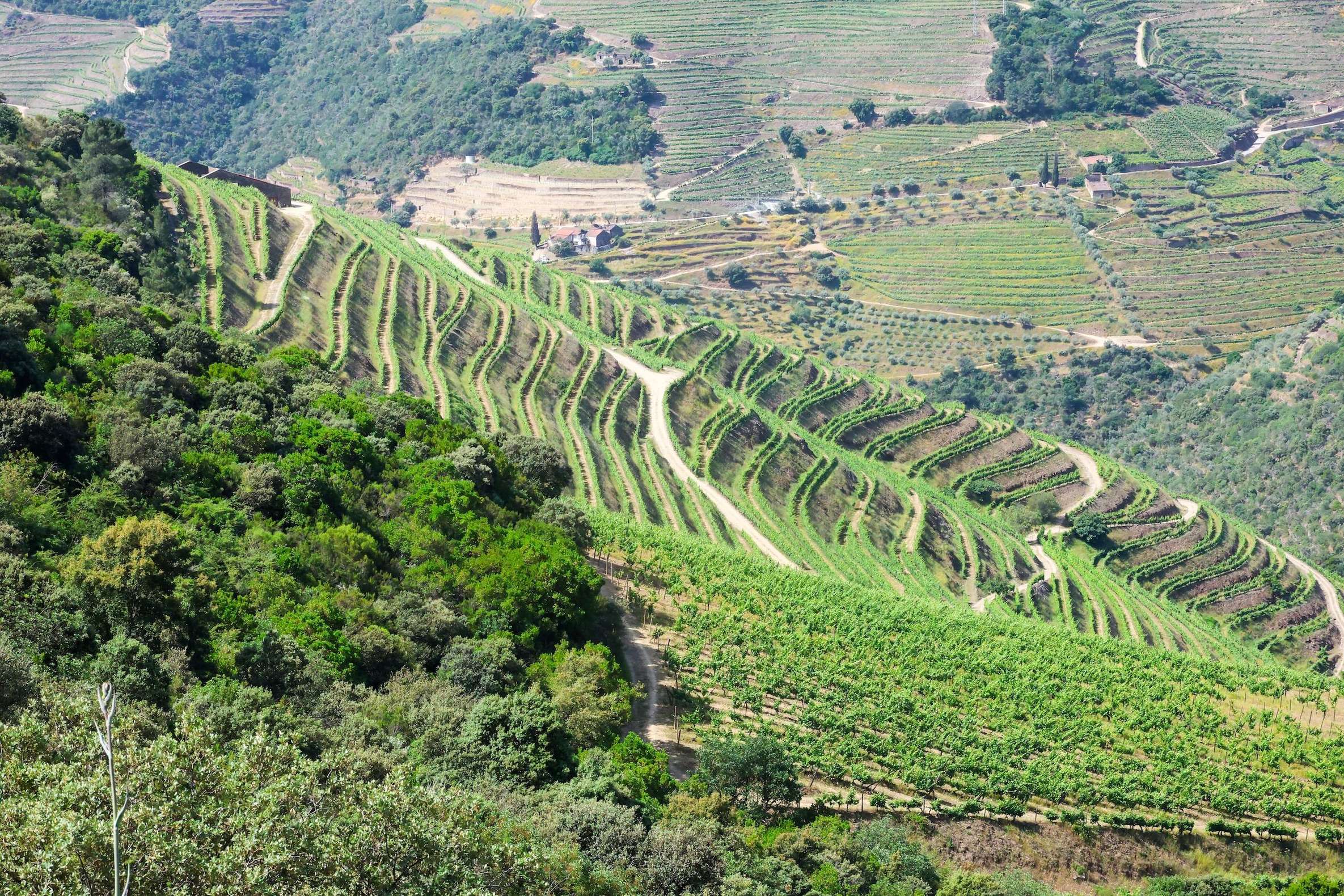
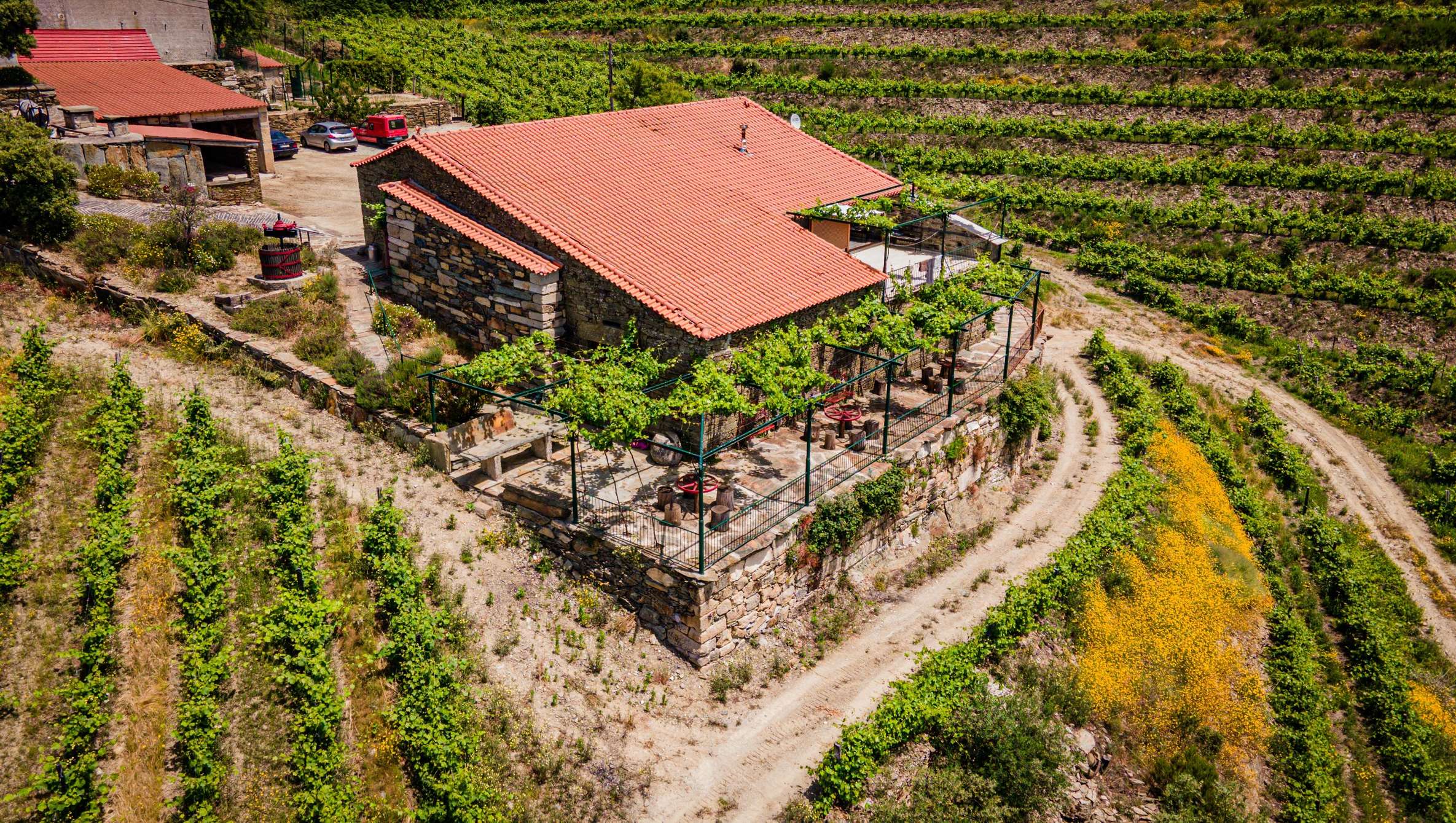
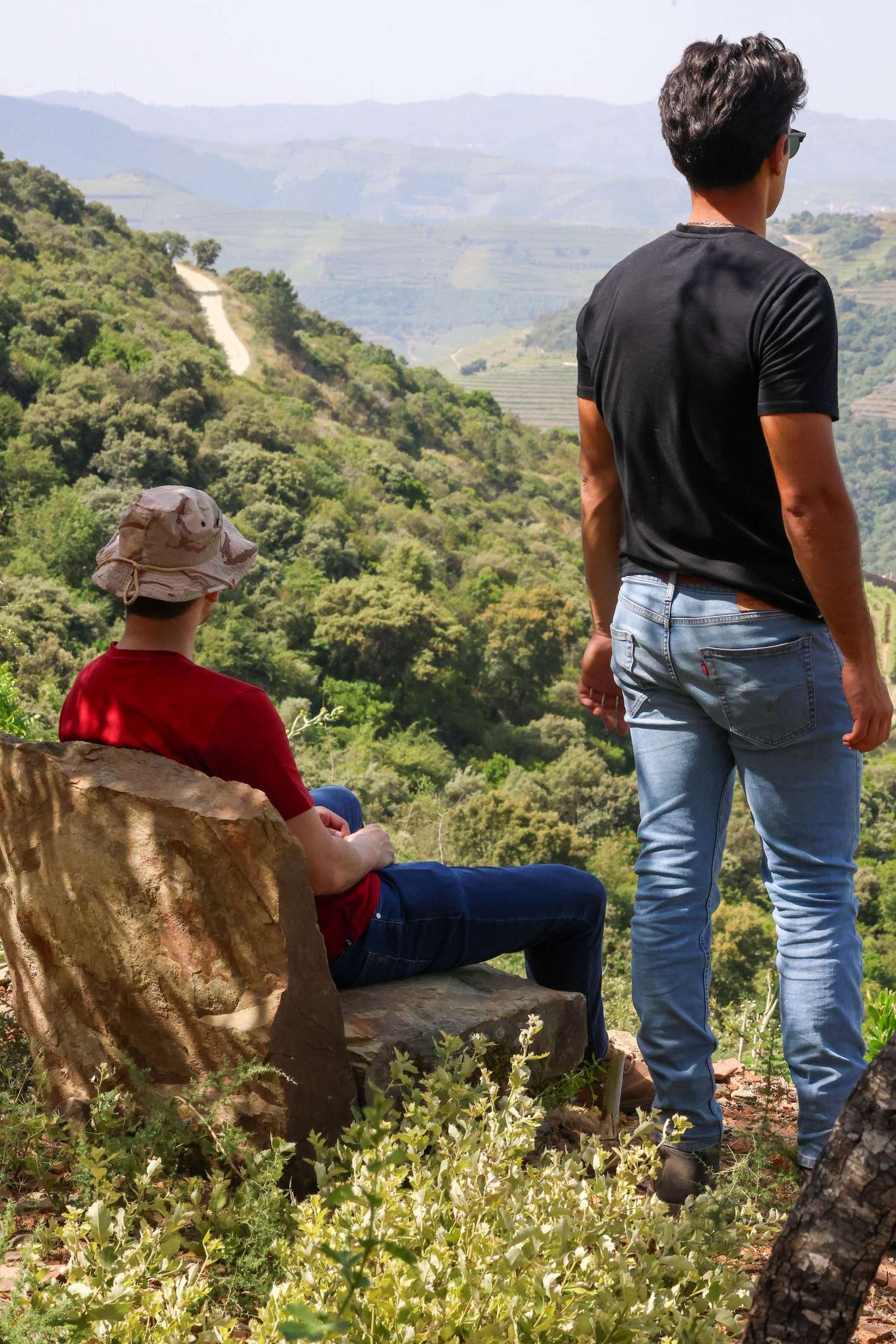
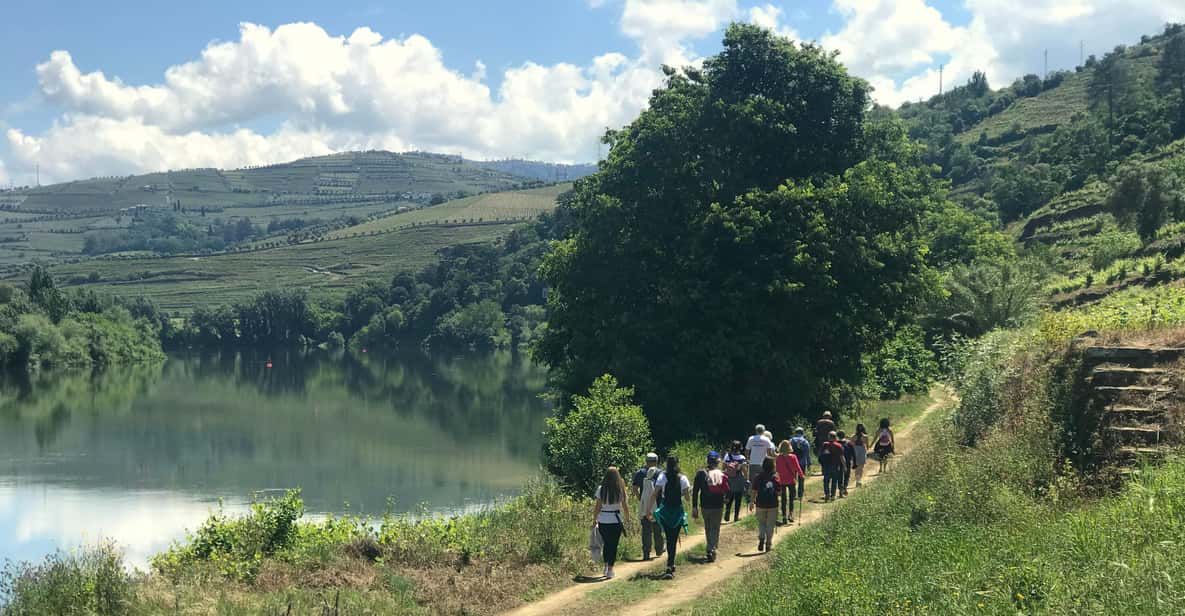
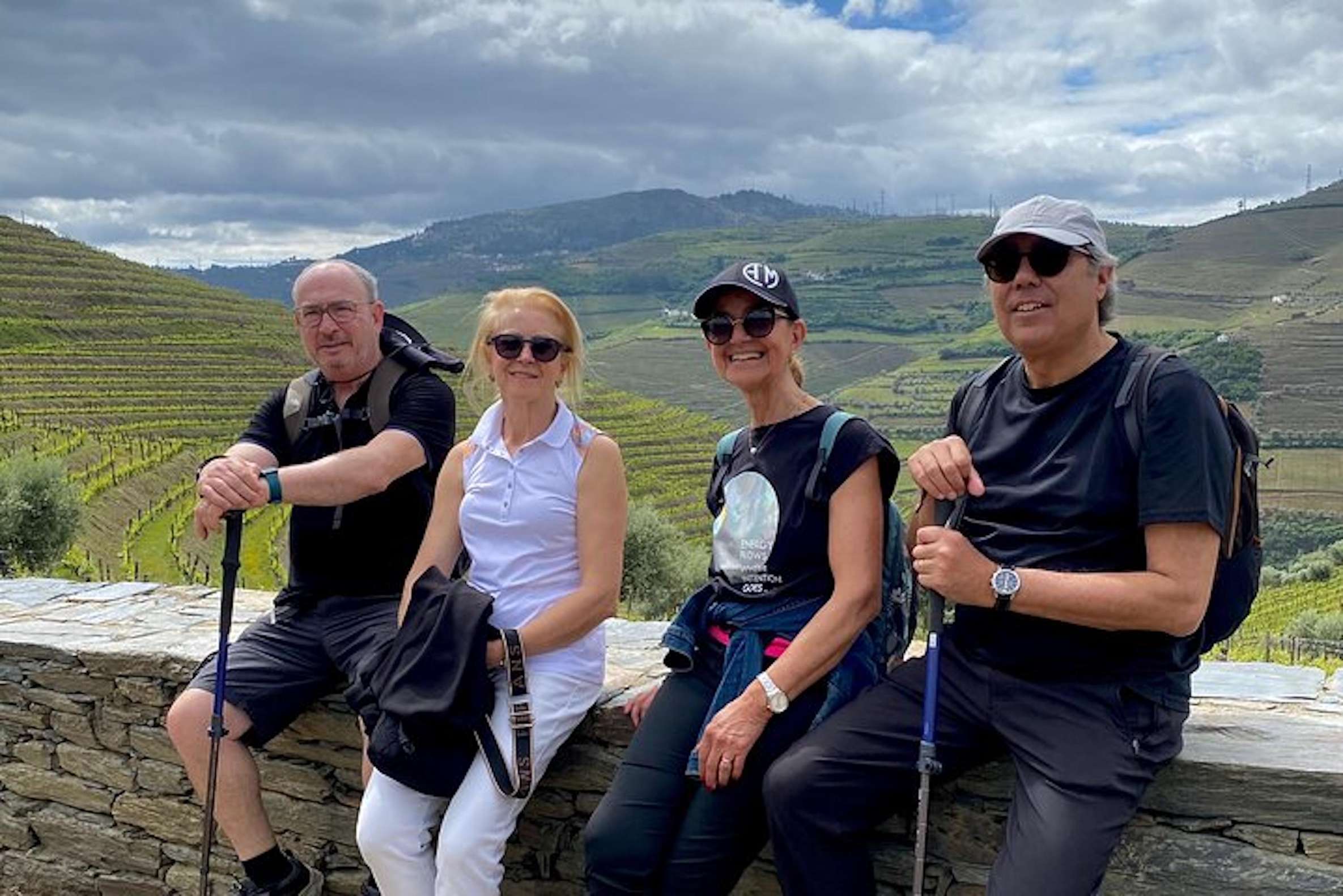
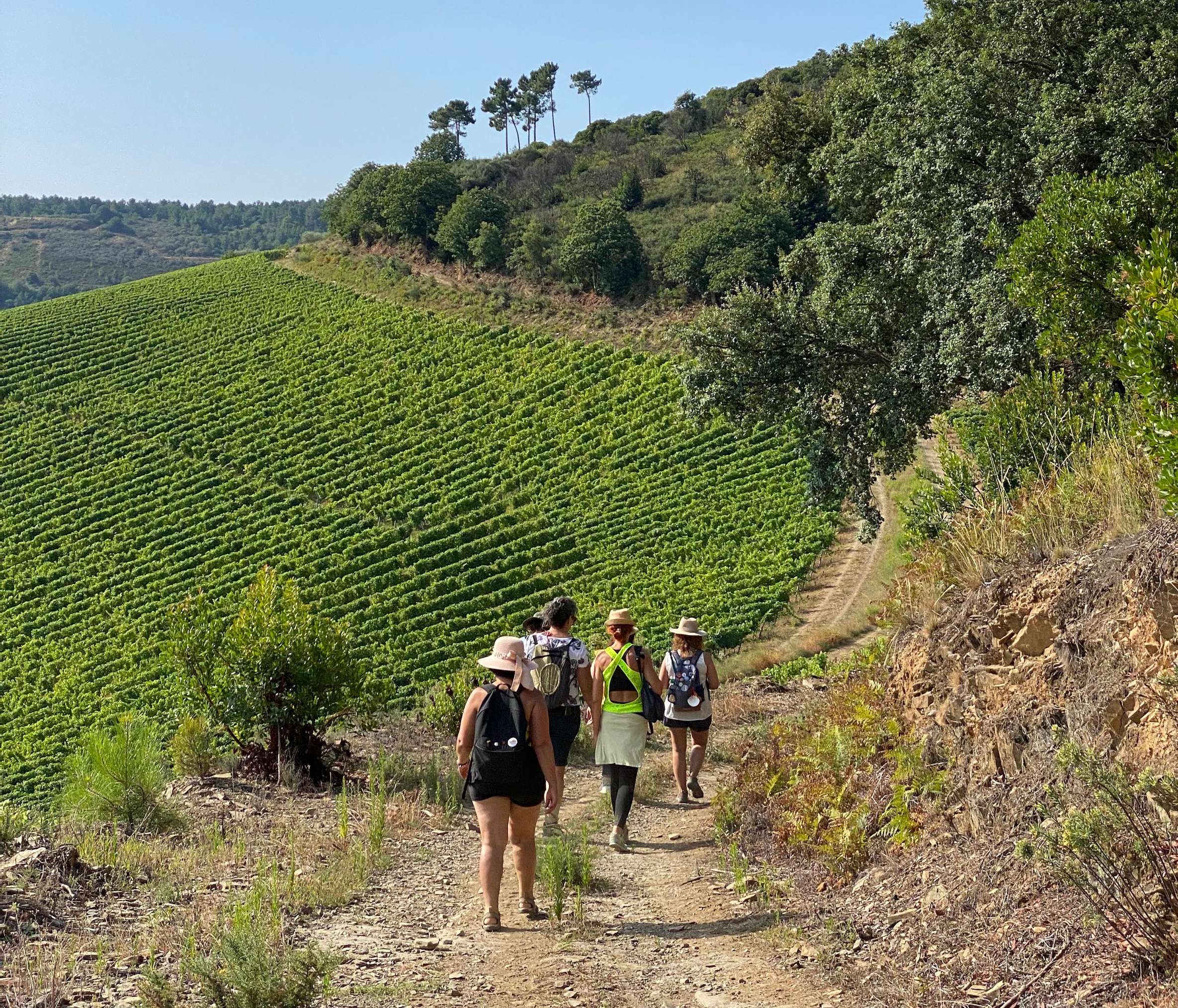
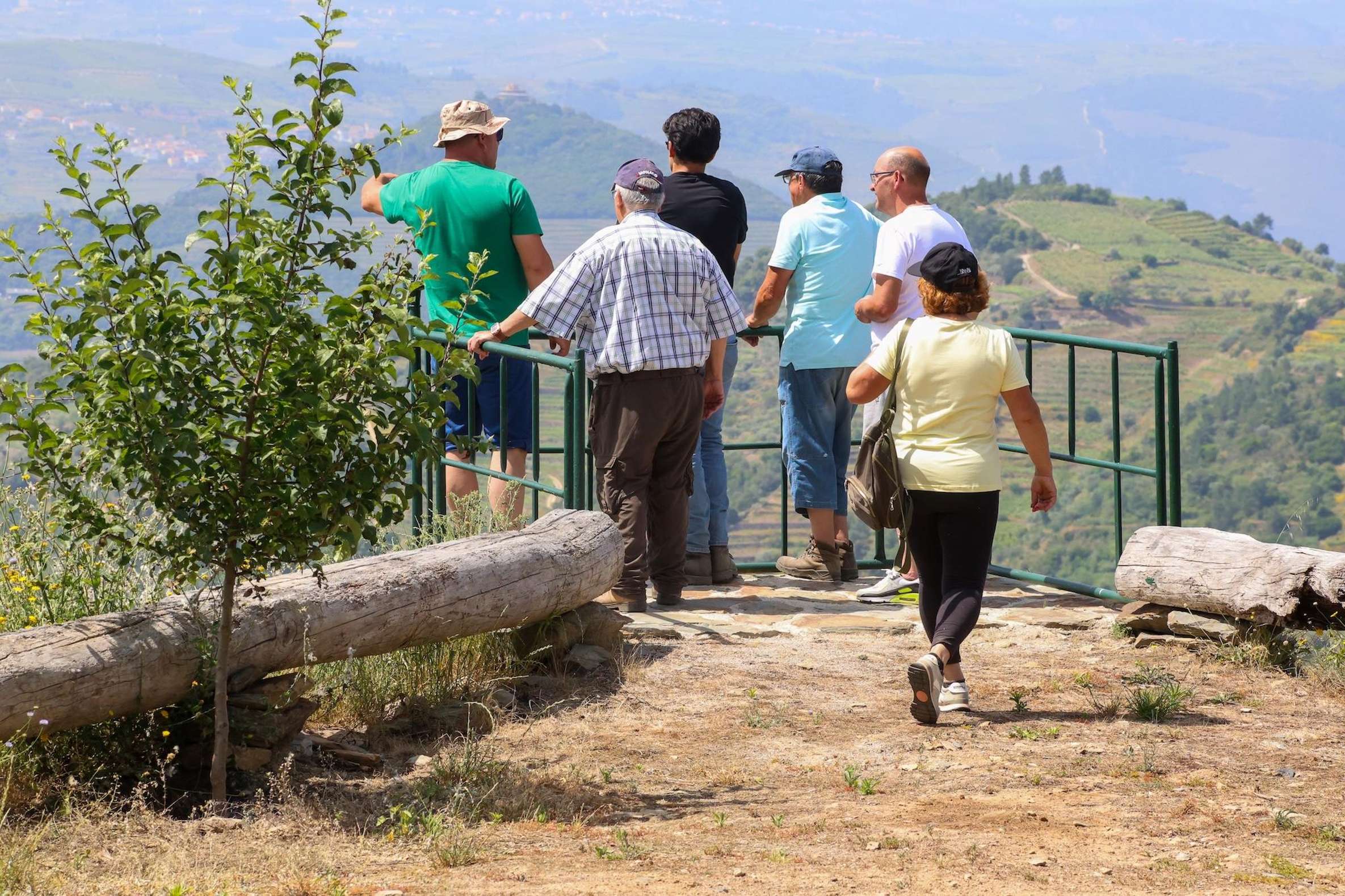
The walk starts on rural paths above the river, where the terraced slopes you usually watch from a boat or a car become something you climb.
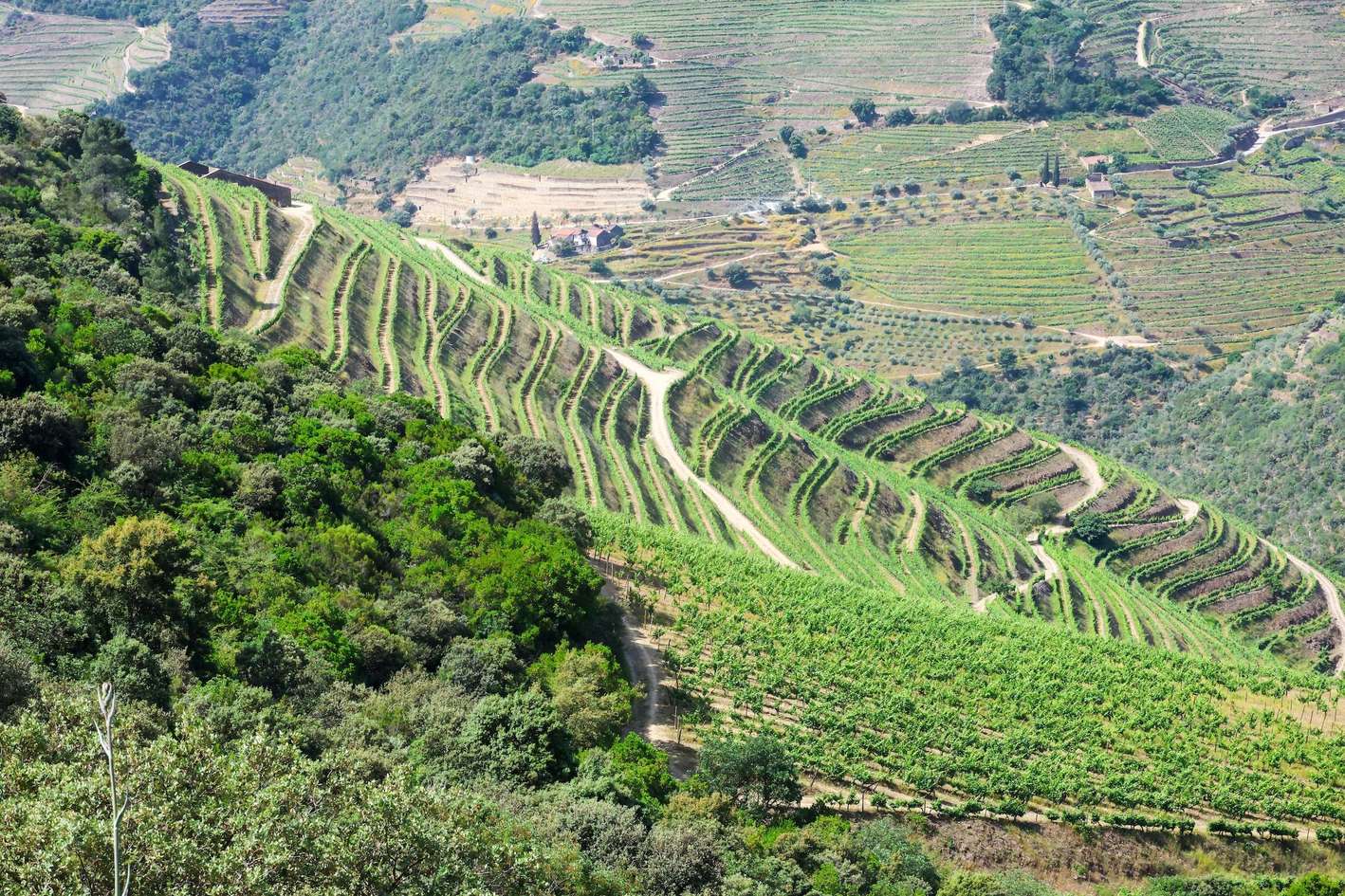
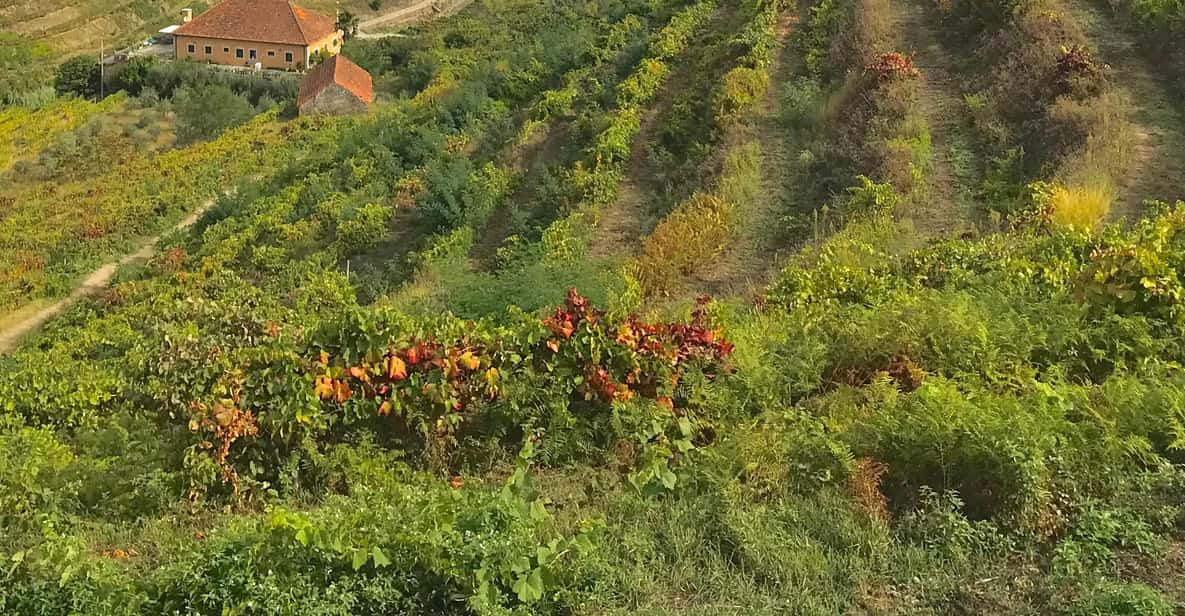
Stone walls, vine rows, olive trees and changing angles on the Douro pass within arm's reach, and the valley stops looking like a postcard and starts feeling like a place people have farmed for nearly two thousand years.
All routes start at Lugar do Esteval and run with a local guide, who handles the wayfinding and the estate access.
You pick the distance: a gentle 4 km downhill walk, a 7 km loop, or a 9 km one-way trail with the transfer back included. The three options run between 3 and 5 hours, and water, snacks and a picnic come along.
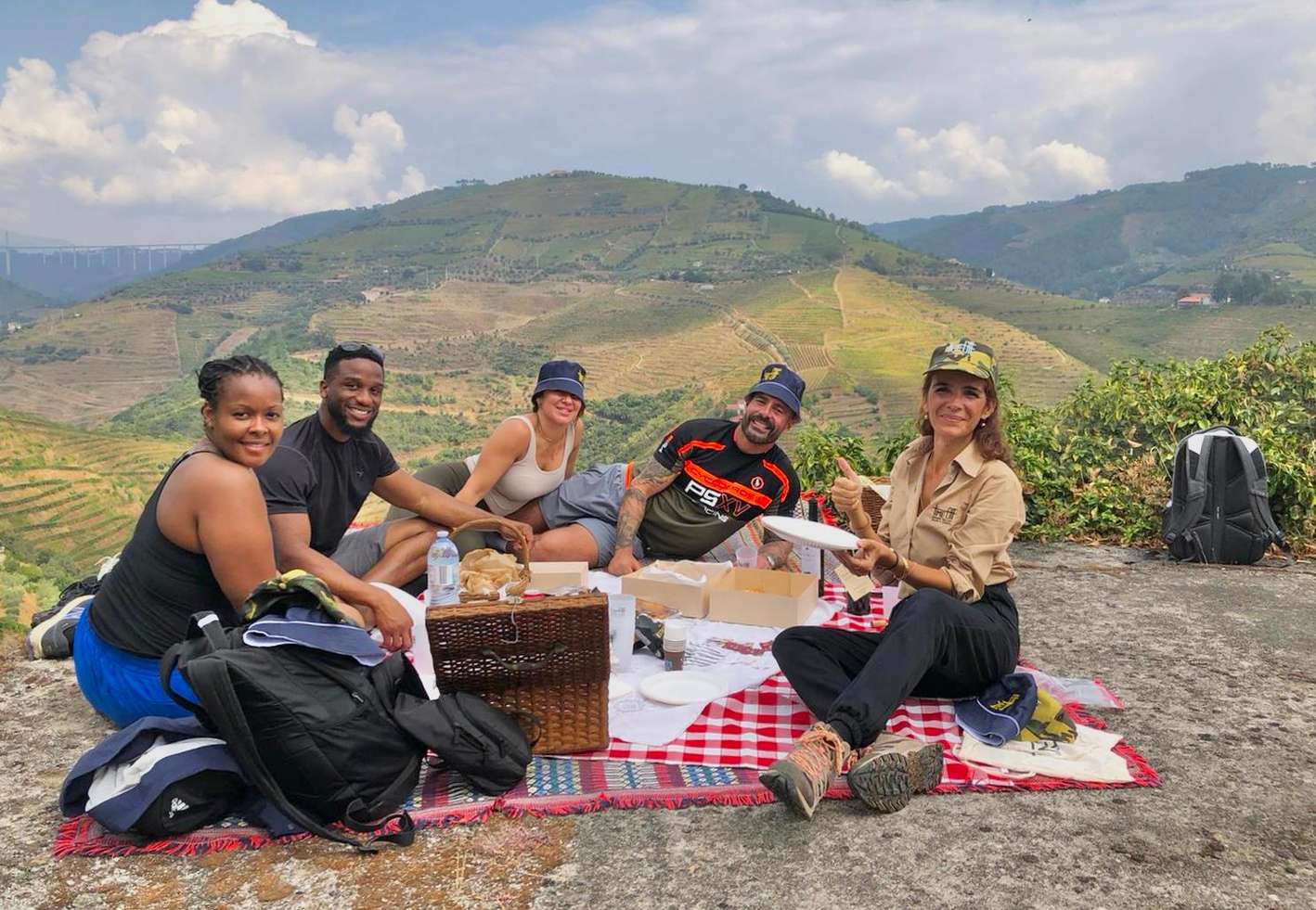
1Meeting at Lugar do Esteval· about 15 minYou arrive at Lugar do Esteval, where the local guide walks you through the route and hands out water and snacks for the trail.2Walking the vineyard paths· about 90 minThe trail climbs through vineyards and rural tracks on the terraces above the river, with viewpoints opening over the Douro and the deep valleys around it.3Lagares do Cíbio ruins· about 30 minYou explore the abandoned wine-making settlement left behind after the 19th-century phylloxera plague, a quiet stop for photos and stories about the region's wine heritage.4Mêda do Gato and Cotas· about 45 minDepending on your route, the walk passes the Mêda do Gato rock shelter and continues toward the traditional village of Cotas.5Open kitchen by the river· about 60 minThe hike ends at an open kitchen with views over the Douro, where a picnic is laid out with drinks to close the walk.6Transfer back· about 30 minOn the one-way routes a return transfer takes you from the finish point back to your start, included in the price.
The one reviewer rates the views and the riverside picnic at the end as the best part of a very special day.
Best surprise
Travelers loved seeing the quieter, less touristy side of the valley on foot, away from the crowds.
Most common wish
Reviewers wished the day had gone on longer, and were glad the guides stayed flexible when plans ran late.
How to book your hiking day in the Douro Valley
01
Pick your date and format
Decide first between a guided day hike of three to five hours and a multi-day walking journey of three or five days. The day hikes run in three route options, and the multi-day journeys book as private tours for your group.
Pro tipStart the walk between 8 am and 9 am so you finish by 11 am, before the exposed terraces climb past 35°C
02
Choose the right option
On the day-hike listing, pick the easy 4 km downhill route, the 7 km circular walk or the 9 km one-way trail with return transfer. For a walking journey, choose the 3-day or 5-day all-inclusive package.
Common mistakeFirst-timers assume a Porto hotel pickup comes with the guided hikes. Transport to the meeting point in Cotas is on you
RecommendedTuesday to Thursday sees fewer tour buses and quieter trails than weekends
03
Book and pay
Select your date and option online and pay through the booking platform. All four hiking experiences let you cancel up to 24 hours in advance for a full refund, so a flexible plan costs nothing extra.
ImportantSome Douro Valley tours ask for a passport or ID card at check-in, so carry one on the day
04
Sort out the meeting point
The guided day hikes meet at Lugar do Esteval, near Cotas. The 3-day walking journey meets on the National Road N2 in Cumieira village, in front of the Celeiro Coffee Shop. The Pacheca day lets you meet at the estate or add a transfer from Porto.
Pro tipRent a car for the day hikes and you can stop at viewpoints on the way, since the drive between them is short on the map and slower in reality
05
Prepare for the day
Pack comfortable or hiking shoes, a hat, sunscreen and water; the multi-day journeys list the same kit plus clothes you can layer. A local guide leads every route, so navigation and pacing are handled for you.
RecommendedRain does not stop the day. Tastings and estate visits move indoors, and a morning hike in light rain is part of the deal
Common mistakeSetting out in summer sandals. The schist terraces are steep, stony and mostly shadeless
What to know before you book a hiking trip through the Douro Valley
Can stop the dayGood to knowGood news
01
ChoosingWhat it is, who it suits, when to go
3
Difficulty
The hikes on this page run from easy to moderate, with steady climbs on dirt and terraced paths. Expect very steep stretches where the trails link one terrace to the next, and uphill sections that take about twice as long as the way down. A reasonable level of fitness carries you through.
Timing
Walks start in the morning, between 8:00 and 9:30, and finish by midday or early afternoon. That keeps you off the exposed schist terraces when the mid-afternoon heat regularly passes 35°C in summer. On the multi-day journeys the hikes run 9:30 to 12:30 pm, with afternoons free to rest.
Guides
Every hike here runs with a local guide who knows the paths, so you can leave the map questions behind. Trail markings in the valley sit on telegraph poles and rocks, fade fast, and old goat paths cross the official routes; navigation is exactly what you are paying the guide to handle.
02
BookingHow far ahead, and what happens if plans change
1
Cancellation
You can cancel up to 24 hours before the walk starts and get a full refund, so a weather change or a shifted travel plan costs you nothing. Book the date you want and keep the option to move.
03
Before you goPapers, health, what to bring
6
FootwearCan stop the day
Closed-toe walking shoes with good grip are needed year-round for the schist slopes, loose gravel and stone steps. Ankle-support boots or deep-lug trail shoes work best on the slippery rock. The vineyard walks at the Pacheca estate are shorter and easier, but the same shoes apply.
Water
Carry a refillable bottle or hydration pack with 1.5 to 2 liters per person, rising to 3 liters in summer, because the remote trails have no fountains. Water and snacks are provided on the guided day hikes, so you can top up along the way.
Sun protection
The terraces reflect heat and offer almost no shade, so bring a wide-brimmed hat, sunglasses and high-SPF sunscreen on every walk. In spring and autumn pack breathable layers and a light waterproof, since those months see 9 to 13 wet days each.
What is included
The day hikes come with a local guide, return transfer on one-way routes, water, snacks, a picnic, insurance and an open-kitchen viewpoint at the end. The multi-day journeys add accommodation, daily lunches with drinks, dinners and all trail transfers.
Health limits
The hikes suit people with back problems, mobility impairments or heart conditions poorly, because the terraces climb steeply and the ground is uneven. The 5-day journey also sets a minimum age of 9 and is not suitable for pregnant women. If any of this applies to you, choose a van and boat day instead.
Phones
Mobile signal drops out deep in the river canyons, so an offline map downloaded before you set out is worth having even on a guided walk. GPS apps also drain the battery fast, and distances measured in narrow valleys read slightly long. A power bank earns its place in your pack.
04
On the dayWhere to be, when, and how you get there
1
Meeting points
The guided day hikes meet in the village of Cotas, and the multi-day journeys meet in the Douro Valley itself, near Peso da Régua and Lamego. Getting to the meeting point is on you. The luxury estate walk can be joined on site, or with a transfer from Porto added to the booking.
05
During the tourWhat is expected of you
1
On the trail
Some stretches grow thick with brambles where the paths go uncleared, so long trousers beat shorts even in warm weather. Littering is not allowed on the guided day hikes, and the vineyard tracks are working farm roads, so give tractors the right of way.
Hiking the Douro Valley - trails, timing and terrain
Vineyard paths here climb stone terraces that motorways and riverboats only show from a distance. The walking is steep and the trailheads are far; both problems have straightforward answers.
If you only remember three things
1
Climbing out of the river valley takes nearly twice as long as walking back down, so plan the uphill time first.
2
Walk between 8 am and 11 am in warm months; exposed terraces can top 35°C in the afternoon.
3
Cancel a booked hike up to 24 hours ahead for a full refund; later than that, one operator gives none.
Is a hiking tour of the Douro worth it?
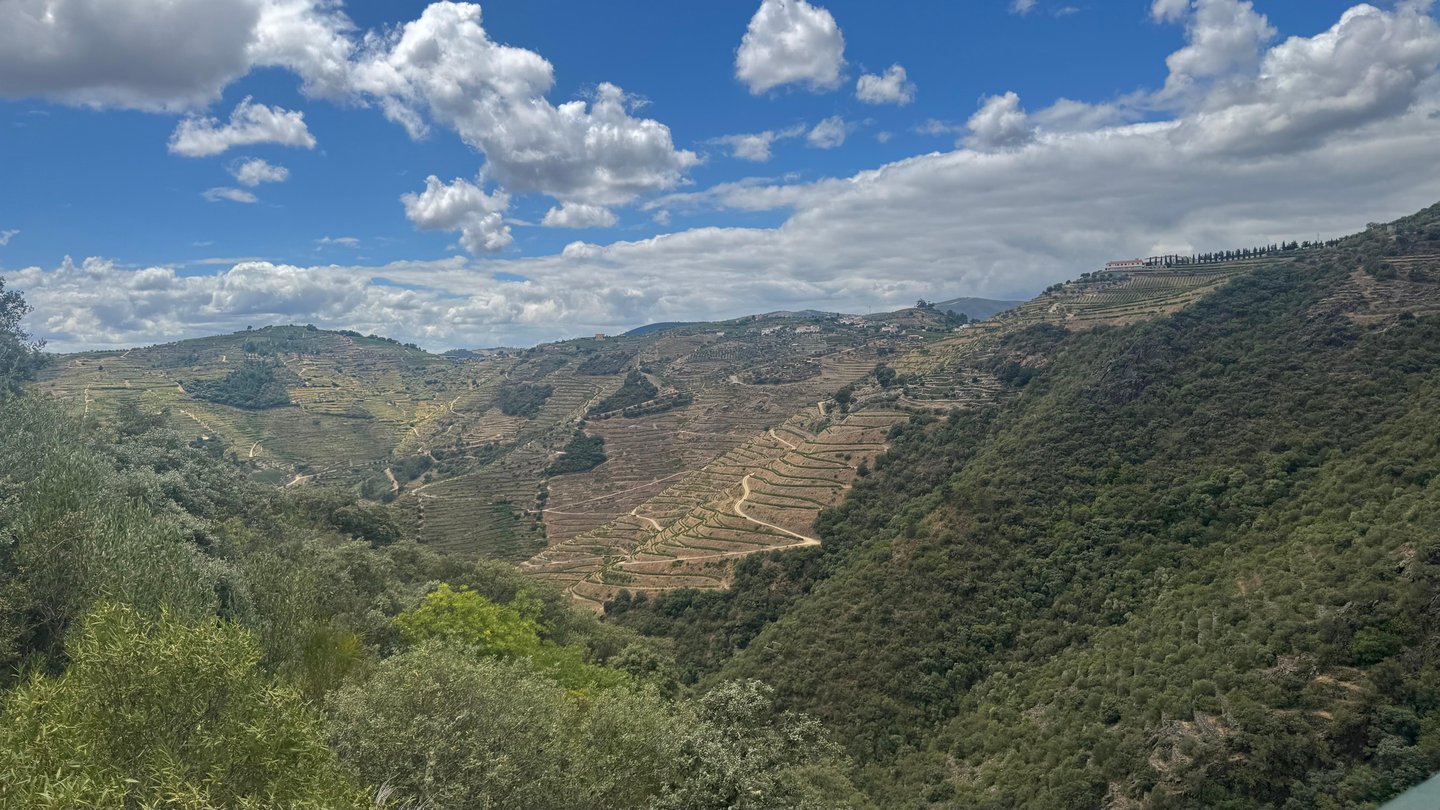
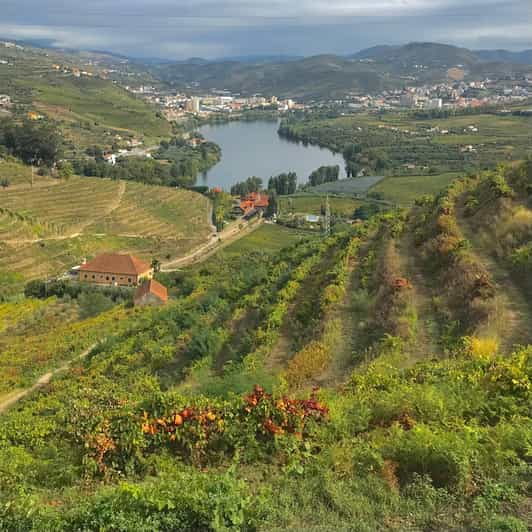
From the river, the terraces read as a flat pattern laid over the hillsides. On foot, the pattern breaks apart into slopes, dry-stone walls, olive trees and vine rows, and the steepness of the ground finally makes sense. The winemaking stops being a story and becomes something you can see happening around your own boots.
The comparison with the standard van-and-boat day is worth making honestly. A guided route covers 5 to 10 kilometers and keeps you on your feet for hours, so it asks for moderate fitness in a way a coach seat never does.
What the effort buys is a different valley: boat rides look back up at the slopes from the water, while walkers look down through them.
The worthwhile versions bundle the logistics. Round-trip transport, a winery visit or lunch at the end, and a guide who explains the terraces and the soil are what separate a good day from a scenic slog. On most day hikes, a river cruise is an optional add-on, so read the inclusions before you book.
A traveler's note
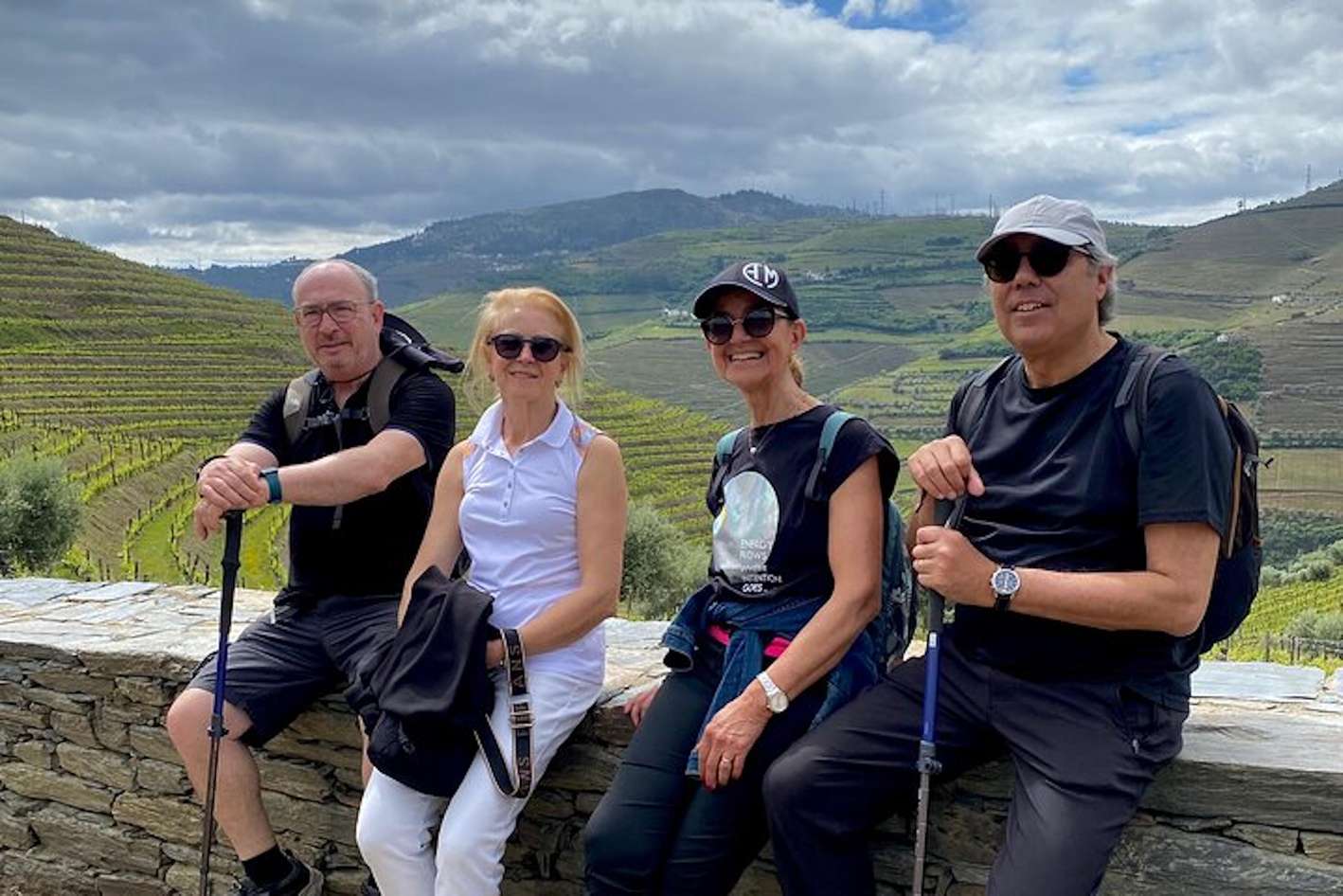
Pedro was super flexible when we ran late. Beautiful views, lovely picnic, less touristy Douro.
That intimacy is the quiet argument for walking. Coaches stop at estates built to receive them; trails end at places where the person pouring is often the person who grew the grapes.
Tour for this
Douro Valley: Guided Hikes with Ruins & River Views5.0★ (3) · 3 - 5 hours · Free cancellation
The honest answer starts with the climbs. Walking up out of the river basin into the terraced hill villages takes strenuous effort before the path levels out, and an uphill stretch costs nearly double the time of the same distance downhill. Connections between terrace levels involve short, very steep pulls.
Underfoot, expect stony ground. The trails run over packed dirt and terraced paths with no technical mountain terrain, so there is no scrambling and no chains, but the frequent lack of shade raises the effort on the river slopes. Most visitors with a reasonable level of fitness handle the majority of routes without trouble.
The canyon itself works in your favor at altitude. Temperatures fall as you climb, so the valley floor in summer can push past 40°C while the hilltops stay several degrees kinder.
In winter it flips: frost is common on the plateau from November to March and rare down in the sheltered gorge, where clouds can settle and leave the river quintas gloomy while the slopes above sit in sunshine.
The same figure decides which format fits. Guided itineraries in this valley typically run 5 to 10 kilometers, and the half-day options within that range give you 3 to 5 hours out on the trail.
How demanding each format is
Guided day hike (5 to 10 km)Steady climbs on terraced and dirt paths, 3 to 5 hours out
Easy
Walk plus estate lunch at a quintaAround 5 km of easy trail followed by a long lunch, most of the day on your feet
Moderate
Multi-day walking journeyMornings on the trail only, easy-to-moderate trails, afternoons free
Moderate
Match the format to your legs. The 4 km downhill option exists for a reason, and people who take it finish fresher for the tasting that follows.
Tour for this
Douro: luxury tour with lunch at Quinta da Pacheca5.0★ (1) · 5 - 8 hours · Hotel pickup · Free cancellation
Self-guided walking in the valley works, with caveats. The trails around Pinhão carry clear signage, and independent walkers manage them without a guide.
Elsewhere the picture changes: waymarkers are painted on telegraph poles, rocks, fences and walls, they fade, and they can be moved or destroyed. Old goat paths cross the official routes at junctions with no signs at all.
The maps add their own wrinkle. Walking maps are rarely digitized, so the real navigation aid is a printed leaflet from a municipal tourism office. Mobile coverage is not a plan in the deep valleys, where signal drops out regularly.
Then there is the land itself. Vineyard tracks are working roads with tractor traffic, locked gates and private property, and access is only granted with a booking. Some estates sell self-guided trail maps or require a tasting reservation; one quinta near Pinhão keeps a free marked footpath open to anyone.
What nobody tells you
Waymarkers live on telegraph poles, rocks and fences
A faded paint mark on a telegraph pole is the trail, and it can vanish without notice
Printed municipal leaflets are the real maps
Most route maps never made it online; tourism offices hand them out on paper
Estate tracks can end at locked gates
Vineyard paths are private working roads, open only with a booking or a tasting
Go alone on the signed loops near Pinhão with an offline map. Hire a guide for remote routes, complicated transfers, or anywhere the land is clearly somebody's livelihood.
Three months own the walking calendar. May, June and September bring daytime highs of 20°C to 24°C and 20 or more dry days each, which is about as kind as the valley gets. April is pleasant too but already busy, and the trails thin out again in October.
July and August are the months to respect. Average highs reach 28°C to 29°C and days regularly climb past 30°C, and during heatwaves interior Portugal has touched 42°C, hot enough that hiking trails get abandoned entirely while wildfire risk runs high.
November through February swap heat for cold rain, with highs of 9°C to 13°C and wet months of 80 to 118 millimetres.
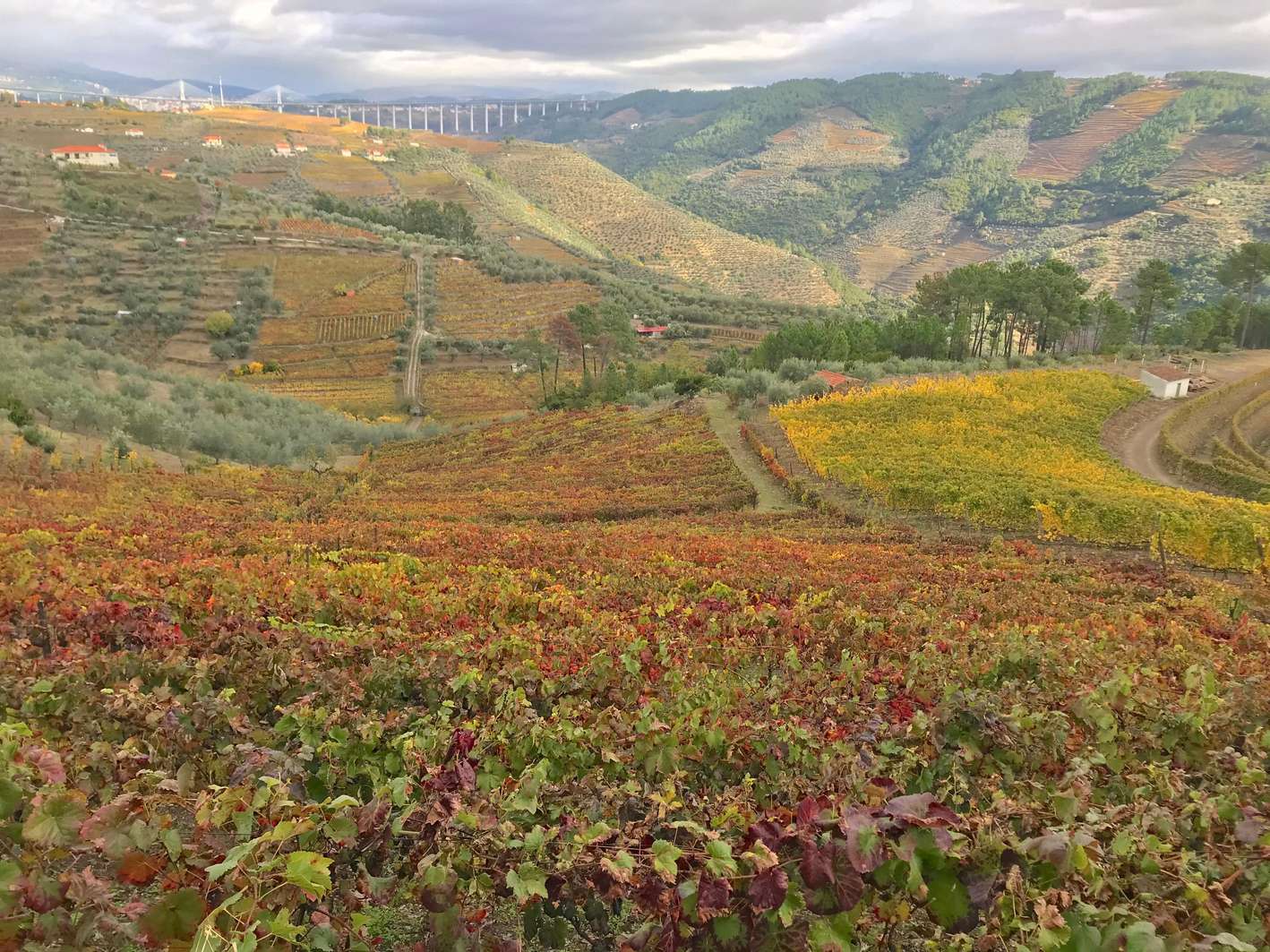
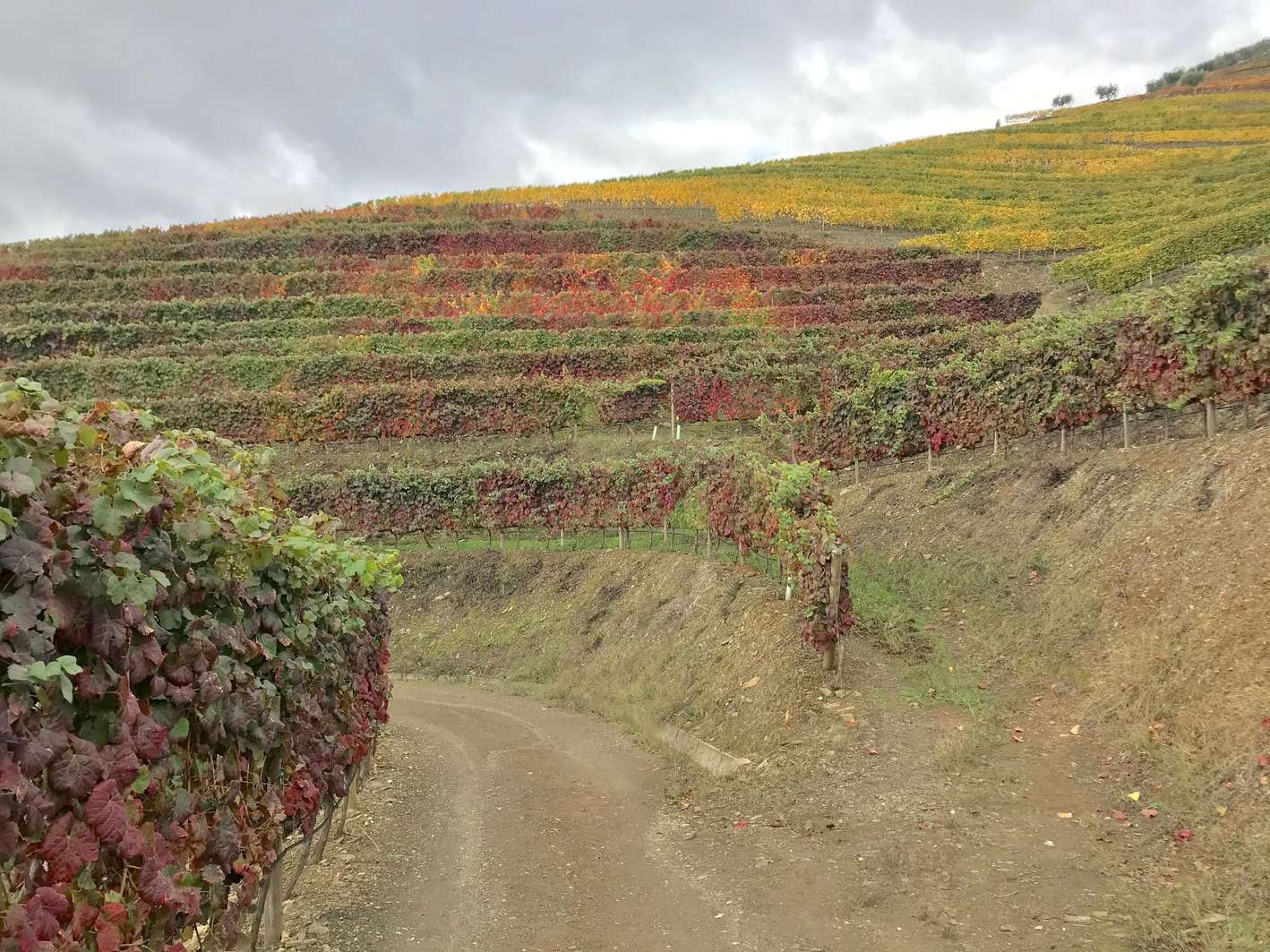
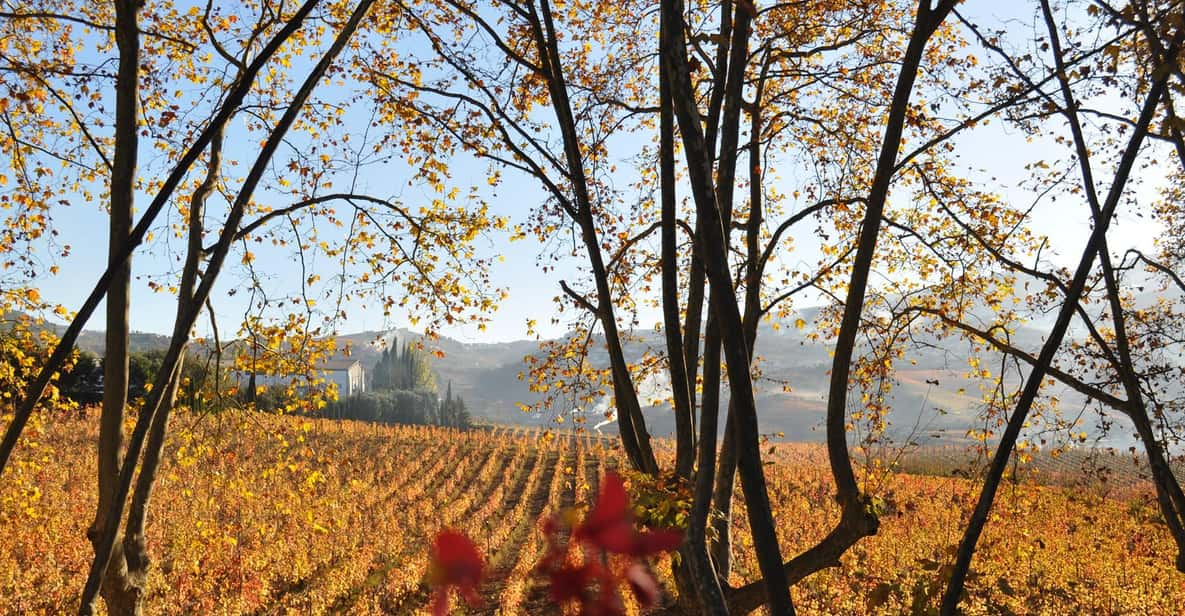
October deserves a special word. It stays mild at 19°C and carries the harvest, when the foliage turns copper and gold, but it is the rainiest month of the year, with wet weather on nearly half the days. Pack a shell and accept it.
The monthly pattern behind all this is worth seeing at a glance: how hot it gets, how often it rains, and how many other walkers share the trail.
Weather and tour crowds by month in Douro Valley
April: 5 out of 5 for how busy it gets. Spring brings moderate tour crowds and milder 17°C highs, but 11 wet days require rain gear for family strolls.
HighestApr to Sep
In betweenOct
LowestNov to Mar
Darker: a higher how busy it gets score, out of 5
Tap a month to read it.
August: highs around 29.3°C. Peak summer holiday crowds coincide with the year's hottest weather near 29°C, requiring morning walks to avoid the heat.
HighestJun to Aug24.1 to 29.3 °C
In betweenApr to May, Sep to Oct16.5 to 22.2 °C
LowestNov to Mar8.9 to 12.7 °C
Darker months: higher, from 8.9 to 29.3 °C
Tap a month to read it.
October: 159 mm of rain. Tour demand moderates amidst pleasant 19°C temperatures, but autumn downpours bring 159 mm of rain across 13 wet days.
HighestOct to Jan112 to 159 mm
In betweenFeb to May, Sep59 to 94 mm
LowestJun to Aug6 to 49 mm
Darker months: higher, from 6 to 159 mm
Tap a month to read it.
August: 30 dry days. Peak summer holiday crowds coincide with the year's hottest weather near 29°C, requiring morning walks to avoid the heat.
HighestJul to Aug29.6 to 30 days
In betweenMay22 days
LowestJun, Sep to Apr17.8 to 21.4 days
Darker months: higher, from 17.8 to 30 days
Tap a month to read it.
What the numbers say for your day: in May you walk in a shirt and finish by lunch, in August you start at dawn or not at all, and in October you carry rain gear to a harvest landscape worth the damp.
The harvest itself runs from late August or early September into October, beginning with the white grapes low in the valley and finishing high on the slopes, so the same month can look two weeks apart at either end.
The formats split cleanly. A single-day guided hike runs 3 to 5 hours and handles the transfers for you, with a return lift included on one-way routes.
A premium version adds a walk of about 5 km at an estate followed by lunch and tasting on the spot. Neither asks you to think about luggage or hotels.
Multi-day journeys change the rhythm entirely. Walking fills the mornings only, from 9:30 am to around 12:30 pm, afternoons stay free for resting or exploring, and nights are spent in rustic accommodation with dinners at local restaurants. If hiking is the main reason you are coming, a week or more is the honest recommendation.
Day formats side by side
Half-day guided hike
Day with estate lunch
3- or 5-day walking journey
Time on trail
3 to 5 hours
About 2 hours of walking
Mornings only, 9:30 am to 12:30 pm
Meals
Snacks and picnic on route
Full lunch with wine tasting at the estate
Lunches, dinners and drinks included
Luggage and lodging
None to arrange
None to arrange
Rustic accommodation, transfers throughout
Suits
Day-trippers who want the effort without the whole day
Walkers who want the reward built in
Travelers making the valley the trip itself
Half-day guided hike
Time on trail
3 to 5 hours
Meals
Snacks and picnic on route
Luggage and lodging
None to arrange
Suits
Day-trippers who want the effort without the whole day
Day with estate lunch
Time on trail
About 2 hours of walking
Meals
Full lunch with wine tasting at the estate
Luggage and lodging
None to arrange
Suits
Walkers who want the reward built in
3- or 5-day walking journey
Time on trail
Mornings only, 9:30 am to 12:30 pm
Meals
Lunches, dinners and drinks included
Luggage and lodging
Rustic accommodation, transfers throughout
Suits
Travelers making the valley the trip itself
The 3-Day Walking Journey in Douro Valley - All-Inclusive is the version that turns walking into the holiday: three days of private guided hikes, lunches with wine, two dinners and two rustic nights, with a transfer for the whole experience. You meet on the N2 at Cumieira village, in front of the Celeiro Coffee Shop.
Tour for this
3-Day Walking Journey in Douro Valley - All-Inclusive3 days · Free cancellation
Mornings decide the day. In the warm months a vineyard walk needs to start at sunrise, or between 8 and 9 am at the latest, to finish by 11 am before the sun climbs onto the exposed schist terraces, where afternoons regularly pass 35°C. Guides build the schedule around that window.
A typical day-hike then moves through the valley's quieter history. Routes out of Cotas pass the Lagares do Cíbio ruins, an abandoned winemaking settlement left by the 19th-century phylloxera plague, and depending on the option the Mêda do Gato rock shelter as well, before opening onto viewpoints over the Douro.
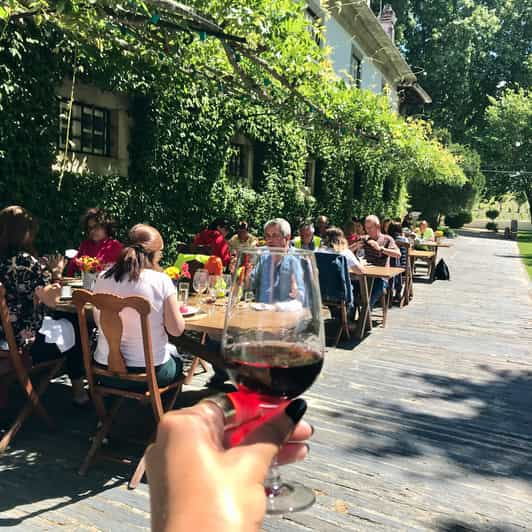
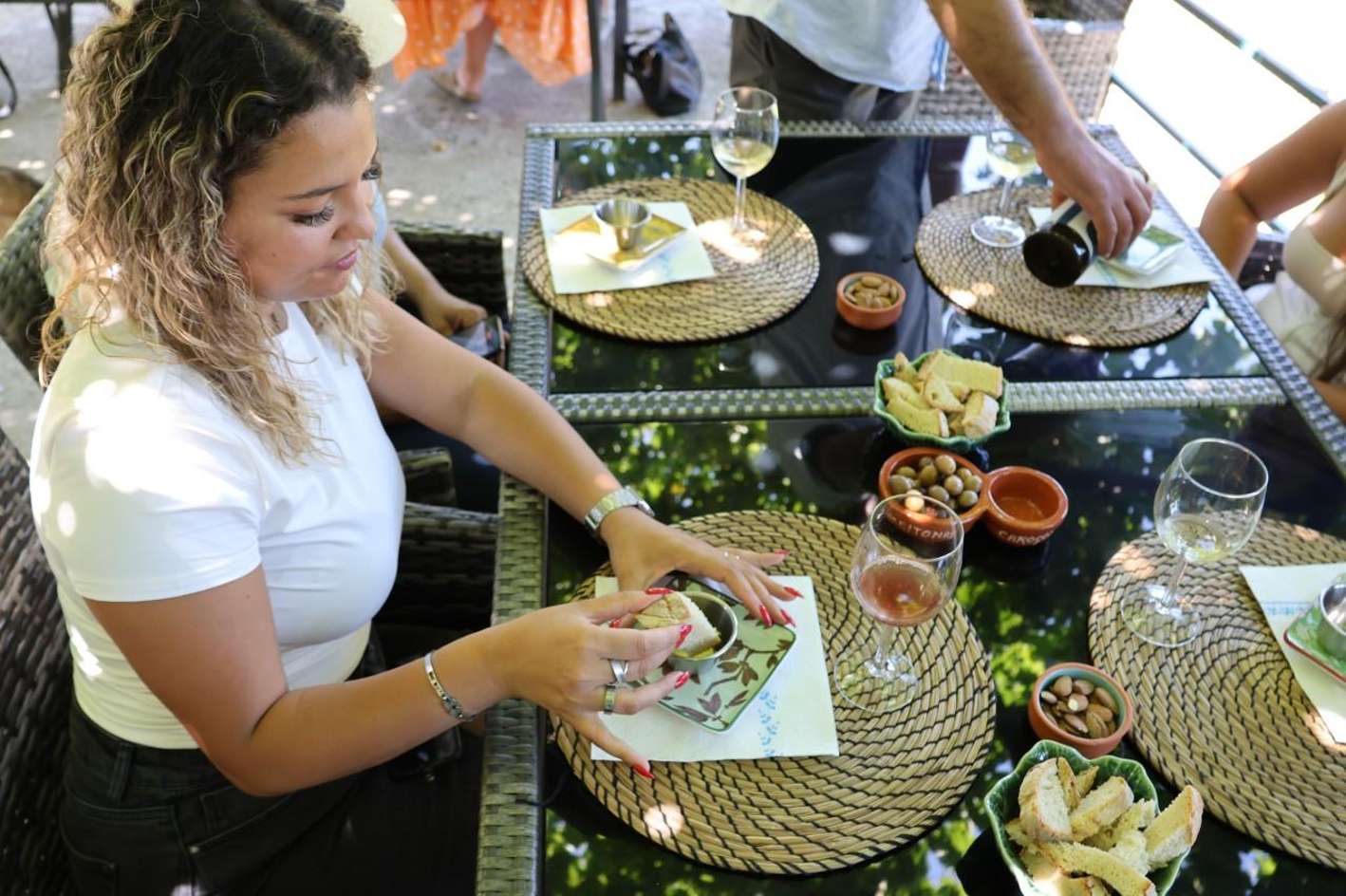
The walk closes with the reward, because tastings and traditional lunches are scheduled at the end of the trek.
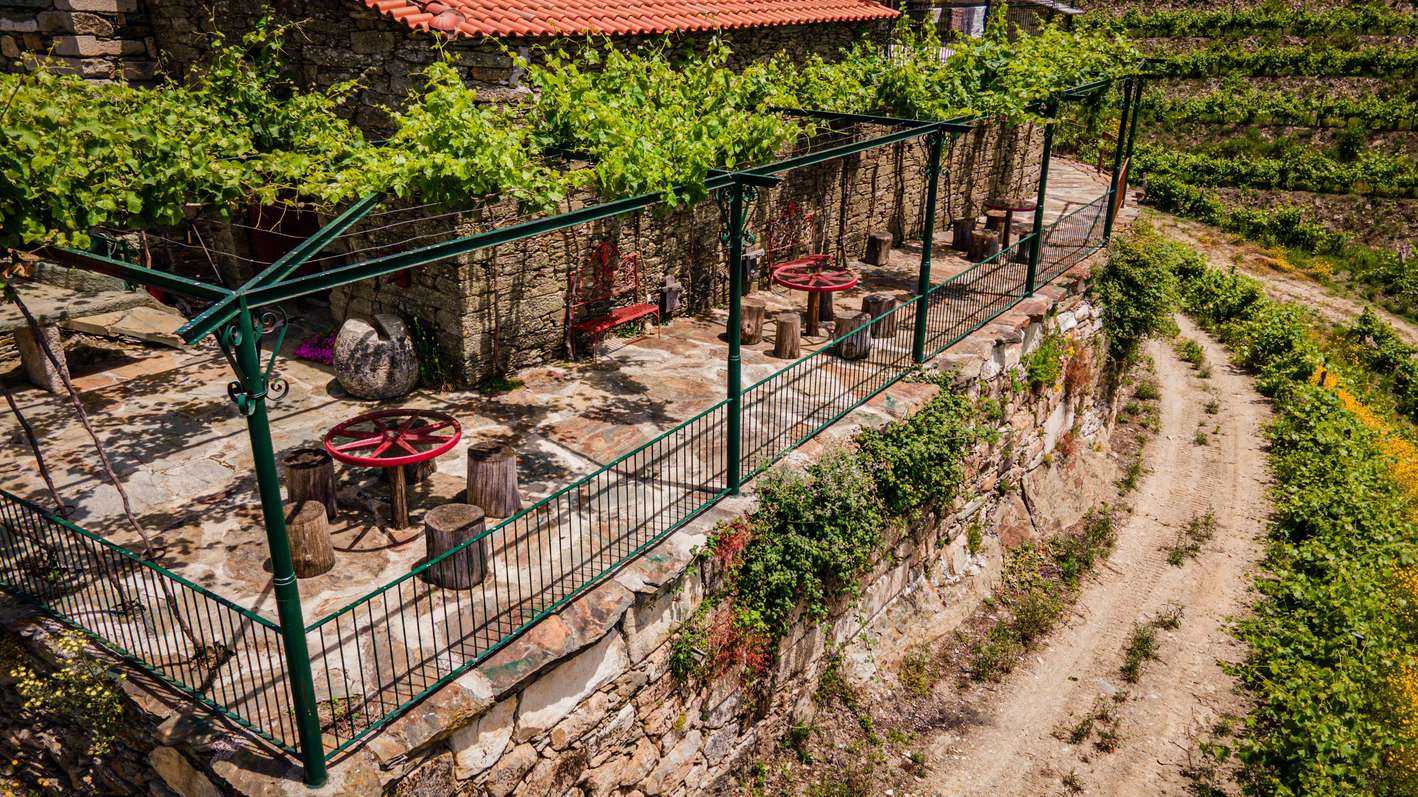
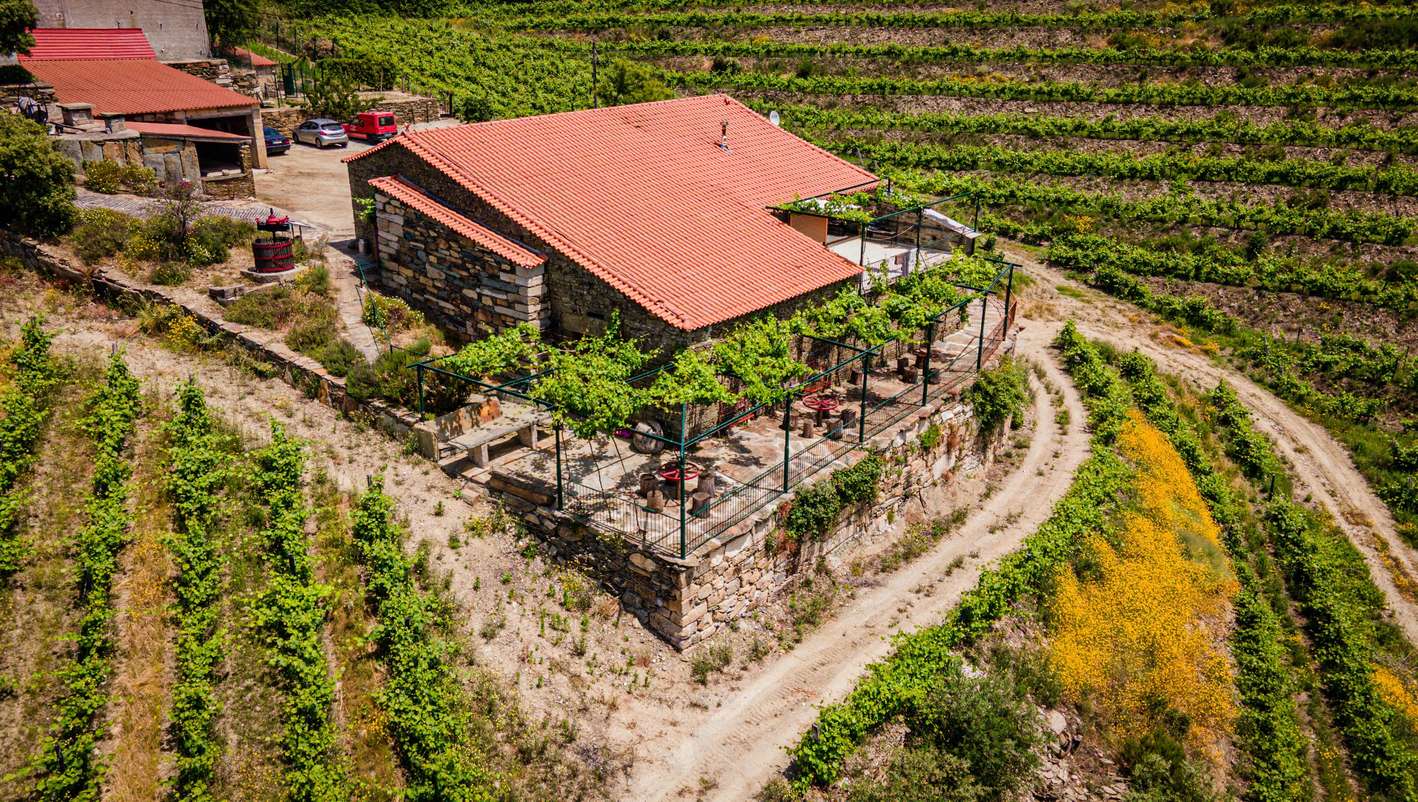
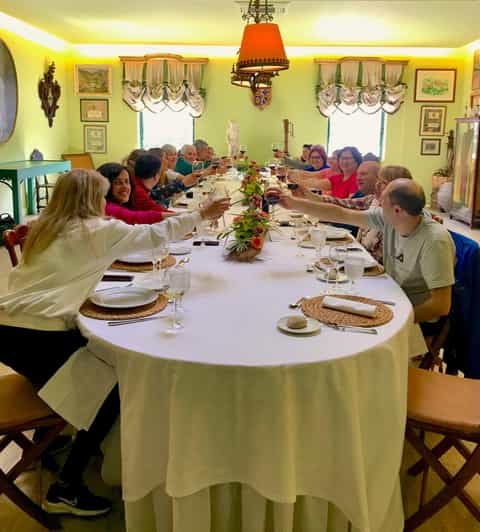
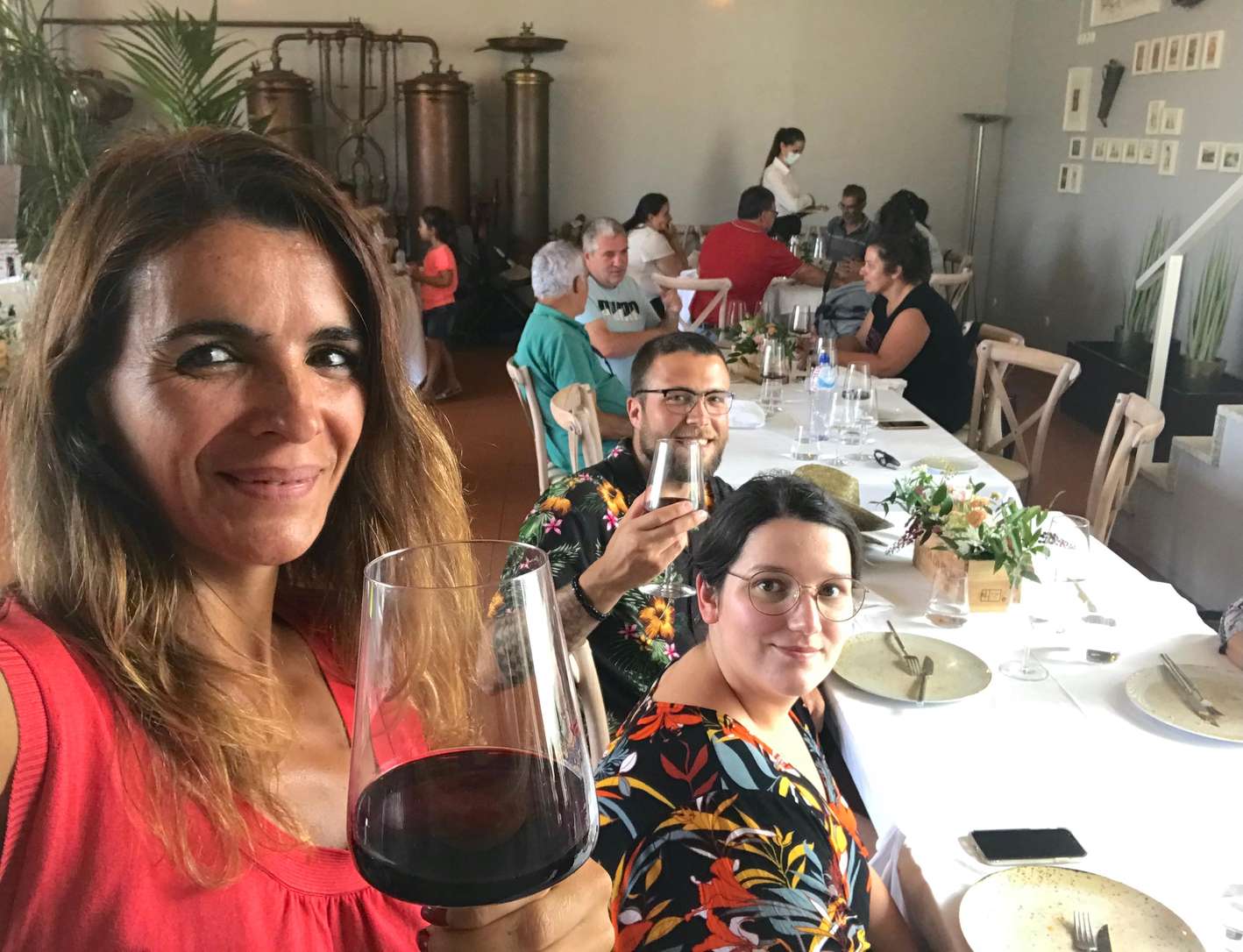
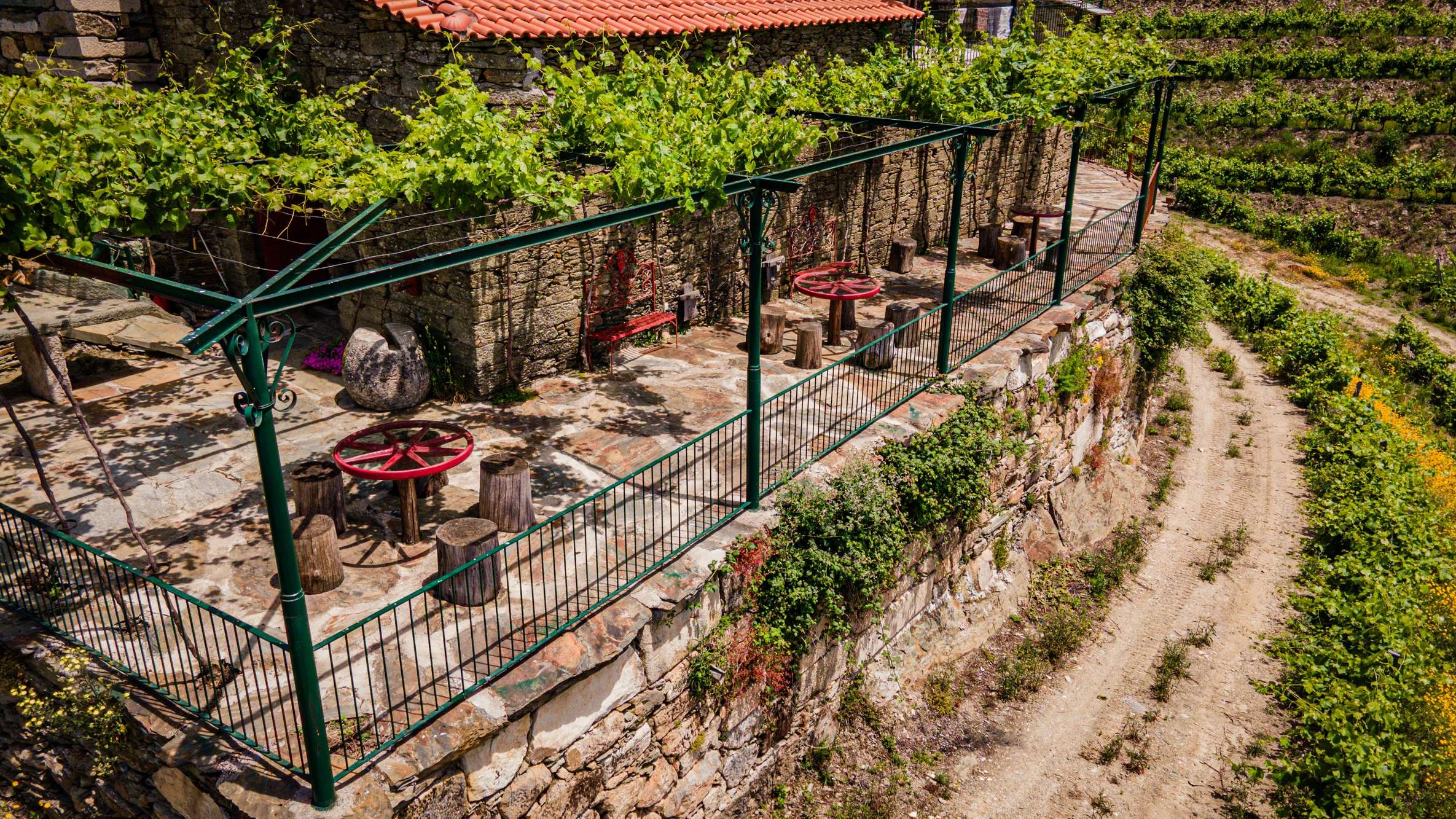
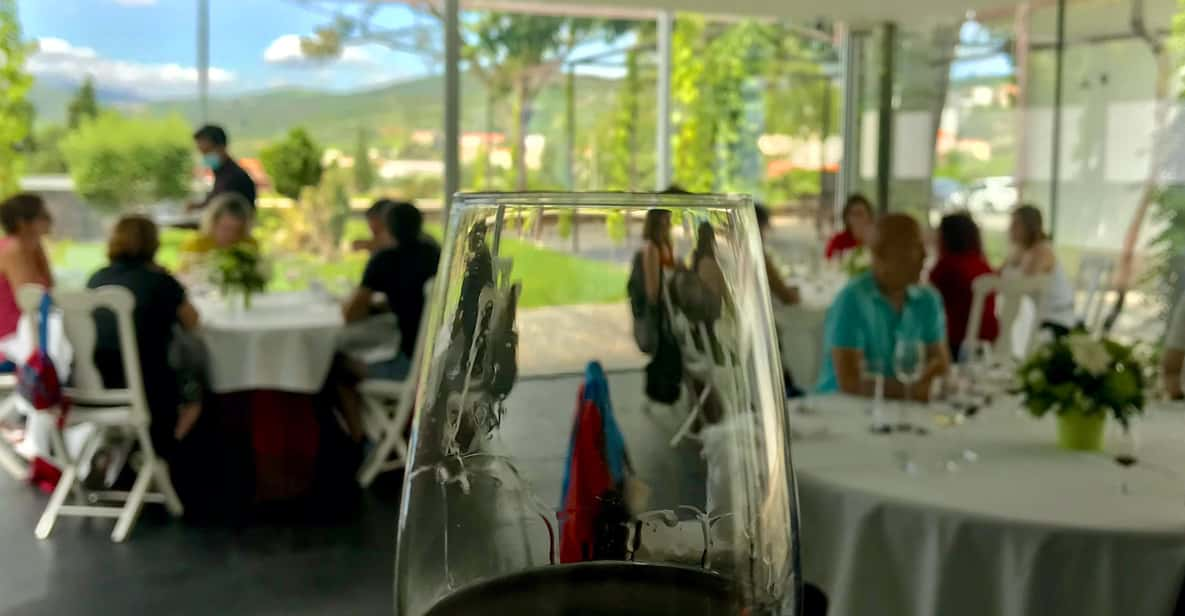
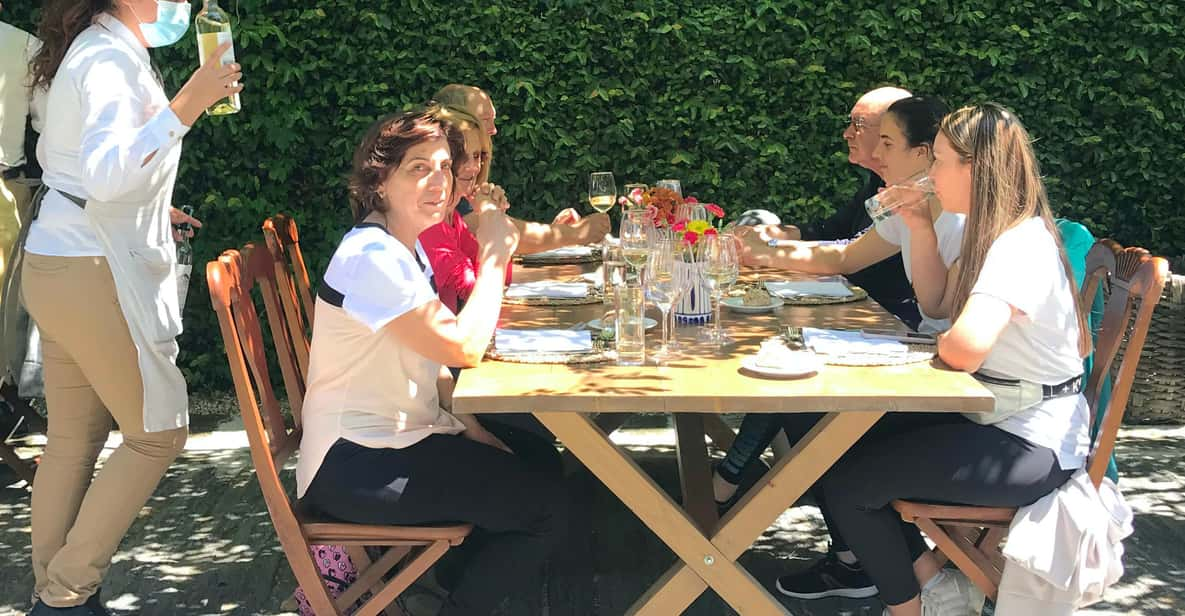
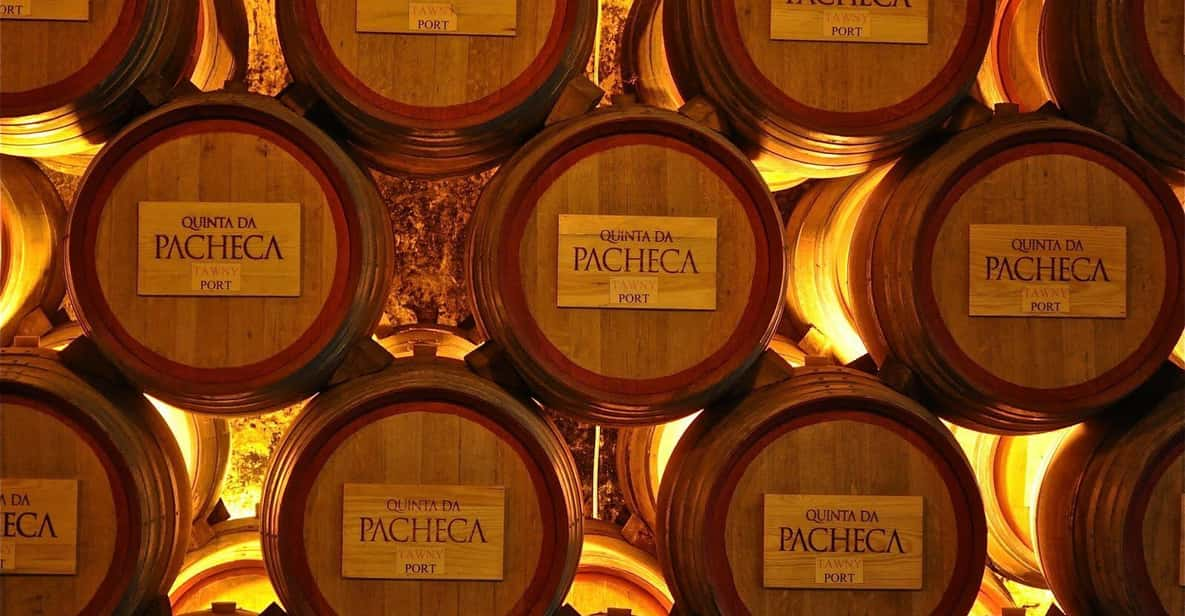
On one route that means an open kitchen above the river; on the estate walk at Quinta da Pacheca it means about two hours of easy trail and then lunch in the estate's dining room with a guided visit after.
The hours fall into a rhythm that repeats on almost every guided version of this day.
How the day unfolds
1
8 am
Meeting at the trailhead or pickup in Porto
Transport to the meeting point is usually yours to arrange
2
8:30 am
First climb onto the terraces
The uphill stretch costs nearly double the descent time
3
Mid-morning
Ruins, rock formations and viewpoints
Photo stops with the guide doing the storytelling
4
Late morning
The walk ends at an open kitchen or estate
One-way routes include a return transfer
5
Early afternoon
Tasting or lunch with wine
On the Pacheca walk, lunch is followed by a guided estate visit
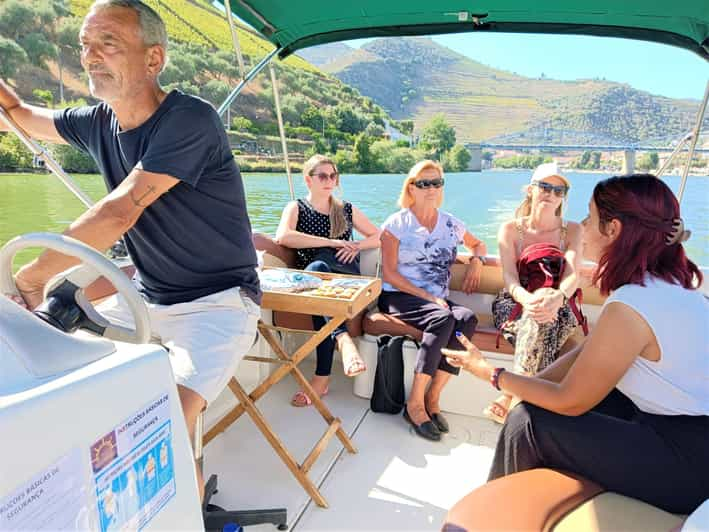
That shape is the appeal: effort first, food and wine after, with the walking done before the heat arrives. If a boat appeals, some full-day combinations pair a morning among the vines with an afternoon rabelo cruise, so the on-foot valley and the water-level one can share a day.
Tour for this
Douro Valley: Guided Hikes with Ruins & River Views5.0★ (3) · 3 - 5 hours · Free cancellation
The car-free route is real and, for walkers, arguably the better one. Trains on the Linha do Douro leave Porto Campanhã directly; from São Bento you connect with a four-minute urban hop first.
The morning through trains, including the 7:30 am departure, reach Peso da Régua in under two hours and Pinhão in about 2 hours 15.
Both stations sit where you want to be. Régua gives immediate access to the riverside trail toward Pinhão, and Pinhão is a day-trip base in itself: vineyard paths and short countryside loops start from the village, and nearby estates are reachable on foot or by the taxis that wait at the station.
The catch is frequency. Trains run four to five times a day in each direction, so the timetable shapes the hike.
Miss the last return train, which leaves in the late afternoon or early evening, and your options narrow fast: ride-hailing apps do not operate in the valley, so it is a local taxi to Régua or all the way to Porto, or a night in a village guesthouse.
What the routes share is the choice they force: the train trades an extra half hour on board for river scenery the whole way between Régua and Pinhão, and the driver in your group gets the day off. Sit on the right heading east.
By car, the first stretch is easy. The A4 and A24 motorways run smooth and multi-lane to Peso da Régua in about an hour and a quarter to an hour and a half, and rental cars carry a Via Verde transponder so the tolls bill themselves.
Then comes the N222. From Régua to Pinhão the road follows the south bank for 27 kilometers and 93 bends, fully paved and wide enough for two cars, but winding enough that distances on the map lie about the time.
Short hops between trailheads and quintas crawl along narrow, twisting roads, and harvest traffic slows everything further in September and October.
Two practicalities decide the day. Rental desks want a physical credit card in the driver's name for the deposit, and licenses from outside the EU or UK, or in non-Latin script, generally need an International Driving Permit alongside the original.
More importantly, Portugal's limit is 0.5 g/l and wine country is an active enforcement focus for breathalyzer checks, so the driver who tastes does not drive. That single constraint explains why many walking groups leave the driving to someone else.
If you do drive, aim the free afternoon at Peso da Régua itself, where the Douro Museum and the riverside sights sit within a short walk of the parking.
Driving yourself
Rent a car in Porto Campanhã StationCompare cars from the rental companies in one search, then pick yours.
The terrain writes the packing list. Schist slopes top 30 degrees in places, with loose gravel, slippery rock and stone steps between the terrace levels, so closed shoes with real grip are the year-round baseline and boots with ankle support or deep-lug trail shoes are the safer choice. Sandals stay in the bag.
Sun comes second. The terraces reflect heat and offer almost no shade, so a wide-brimmed hat, sunglasses and high-SPF sunscreen travel with you in every season, and in summer they matter as much as the shoes.
Clothing stays light and breathable in June through August; spring and autumn call for layers and something warm for the cooler mornings.
Water is the third pillar. Remote trails have no fountains, so carry 1.5 to 2 liters per person, rising to 2 to 3 liters in summer.
Two more habits earn their place: download offline maps and GPS tracks before you set out, because signal dies in the deep valleys and GPS apps burn battery fast, and carry official identification, which Portuguese law requires of anyone aged 16 or older in public spaces.
Pro tipDownload offline trail maps and GPS tracks before setting out Mobile signal fails in the deep valleys and live data cannot be relied on Switch the phone to airplane mode on the trail GPS still works, and the battery stops draining as it hunts for signal
One last thing the vines add: unmaintained stretches can grow brambles and dense vegetation, so long sleeves earn their keep on lesser-walked routes.
Rain is the mildest of the valley's moods. Tastings, cellar tours and lunches move indoors, quinta visits continue with guests sheltered in the winery buildings, and boats keep sailing under cover. A wet day changes the scenery, not the itinerary.
Heat and fire are the harder cases. Ordinary summer temperatures cancel nothing, since tours run rain or shine, but heatwaves toward 42°C with active wildfire risk can force trails to be abandoned entirely. That is an operator's decision, made for safety, and it comes with an alternative activity instead.
The booking terms are the part you control. Tours can be cancelled up to 24 hours in advance for a full refund; inside that window, one operator's policy gives no refund at all.
Changes to a pickup location need more than 48 hours of notice. And punctuality has its own rule: one operator waits only five minutes after the scheduled start before moving on, which at a morning meeting point means the day starts without you.
What happens when plans change
If this happens
What happens then
Heatwave or wildfire forces trails to close
The operator replaces the walk with an alternative activity
Heavy rain on the day
Tastings and cellar visits move indoors; covered boats keep running
You cancel 24 hours or more ahead
Full refund
You cancel inside 24 hours
No refund under one operator's standard policy
You arrive late to the meeting point
One operator waits five minutes, then departs
Book with the refund window in mind and set an alarm for the morning.
There is no single age rule for guided vineyard walks. Policies vary by operator, with some hikes welcoming children from 6 years old and others setting the floor at 12 or 14, so the minimum age is a check to make before booking rather than an assumption.
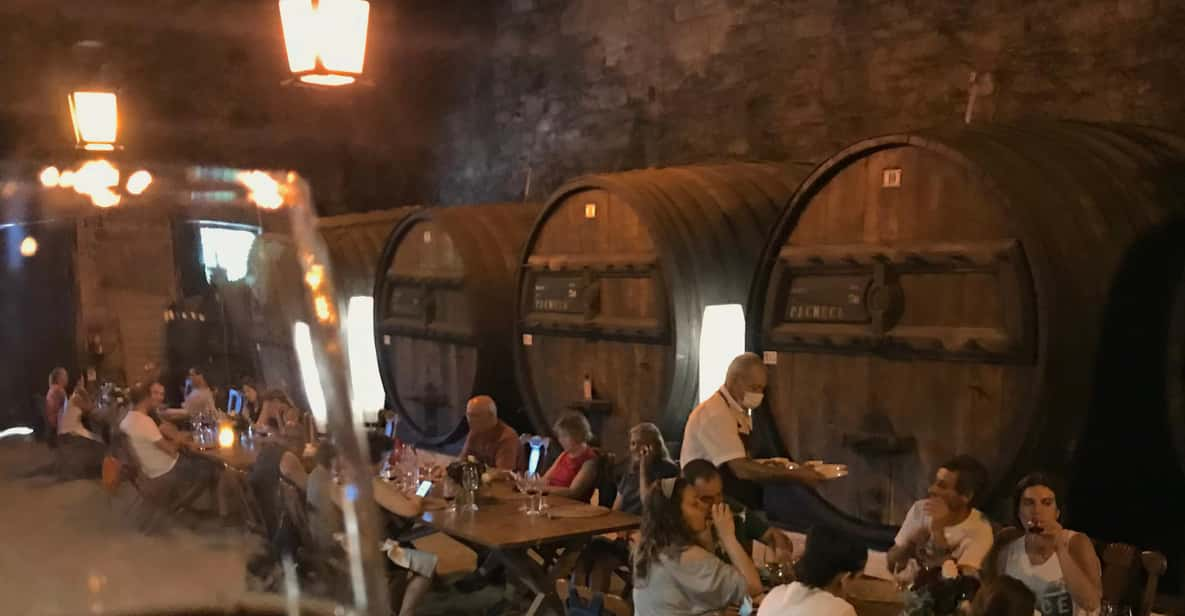
Dietary needs travel well here. Estate and winery lunches accommodate vegetarian and gluten-free diets when requested in advance, and the multi-day walking journeys include local lunches with drinks, wine among them, as standard. Vegan options are available on prior request too.
Mobility is the honest limit. Historic quintas mean uneven ground and stairs, and tours into the valley's wineries are generally unsuitable for wheelchair users or anyone with significant mobility restrictions.
The workaround exists: Quinta das Carvalhas in Pinhão runs an open-air tour of the terraces by vehicle, and station taxis in Pinhão spare visitors the steep hillside walking to nearby estates.
Non-drinkers rarely regret the day. The landscape, the storytelling and the cultural stops carry the experience on their own, and the wine at the end comes as a bonus. Ask for a juice or a soft pour at the tasting and nobody blinks.
Walking the rows - etiquette during harvest and beyond
The paths cross working farmland, and that fact shapes how you move. Vineyard rows and cultivated fields are private property, so walkers stay on the trails rather than cutting between the rows, and during the active autumn harvest every tractor and farm vehicle gets the right of way. Step aside, let them pass, wave.
The grapes are the landowner's income. Picking a bunch to taste is not a traveler's perk; the fruit stays on the vines, and entering the vineyards at all can pose a biosecurity risk to the plants. Keep a distance if spraying has happened or is underway.
Dogs walk on a leash through the vineyards, and every scrap of rubbish leaves with you. None of this is ceremony; these are working hillsides where a careless shortcut can cost a grower a season, and the trails stay open precisely because most visitors treat them that way.
What people get wrong
MythVineyard rows are a public trail network
Reality
The rows are private farmland, and walkers keep to the marked paths
MythA few grapes picked for a taste are harmless
Reality
The fruit belongs to the harvest, and entering the vines can threaten the plants
MythMarked trails never cross private land
Reality
They do, and access depends on bookings, tasting reservations or estate permission
A guided hiking day earns its place here more than almost anywhere in Portugal: the terrain is steep and privately owned, the waymarkers fade, and the reward at the end is a tasting with the people who made the wine.
Go in May, June or September, start early, and let the transfers and the estate lunch come with the booking.
The self-guided loops near Pinhão are the exception, and they work beautifully with offline maps and a train timetable.
Go ifYou want the terraces up close and are happy on 5 to 10 km of stony, stepped trailYou can walk in the morning window and handle a moderate climbYou want to arrive at the tasting on your own two feet
Skip ifYou have significant mobility restrictions; choose the vehicle tour of the terraces at Quinta das Carvalhas insteadYour visit falls in a July or August heatwave, when trails can be abandoned for wildfire riskYou need hourly flexibility; trains run only four to five times a day
Our pick to book
Douro Valley: Guided Hikes with Ruins & River Views5.0★ (3) · 3 - 5 hours · Free cancellation
Quick answers on trail difficulty, guided routes, fitness, and how wine and lunch fit into a day on foot.
2026
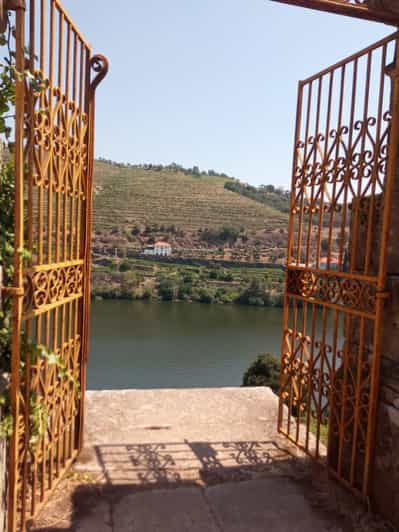
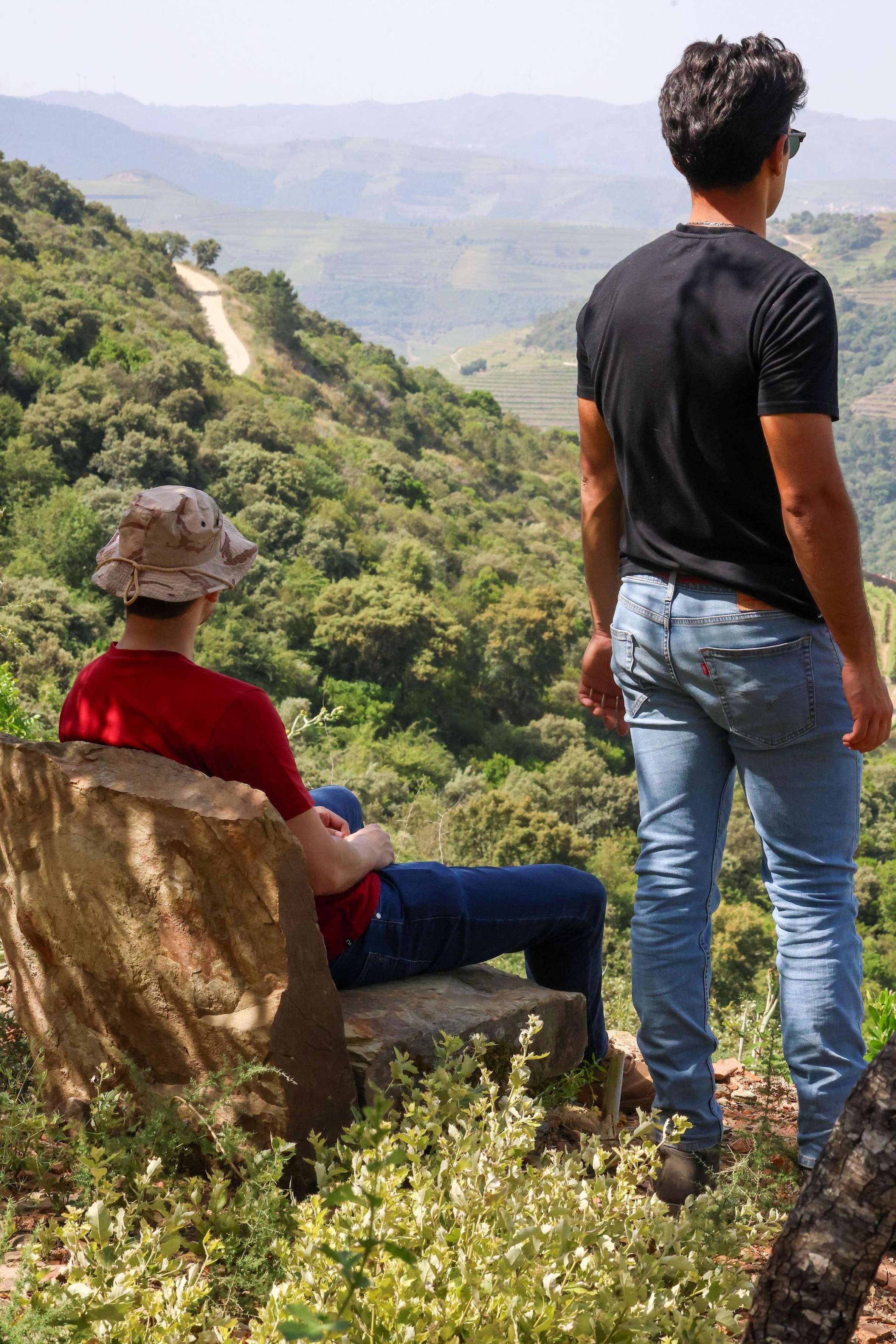
You are standing on a schist terrace looking straight down at the Douro. Book the early start; the slopes bake by midday.
How fit do I need to be for a Douro Valley hiking tour?
Most routes run from easy to moderate, so a reasonable level of fitness is enough. The climb out of the river basin into the terraced hill villages is the hard part, and it levels off once you reach them. Wear sturdy shoes for the steep, uneven stone ground.
Do I really need a guide, or can I hike the vineyard trails on my own?
Some signed trails near Pinhão work fine independently with a GPS app or a paper map. Beyond those, vineyard tracks are working farm roads with locked gates and private land, and waymarkers fade or vanish. A local guide handles the navigation and the access.
How long is a typical guided hike?
Single-day guided hikes last between 3 and 5 hours and usually cover 5 to 10 kilometers. One route near Cotas offers a 4 km easy option, a 7 km circular walk, and a 9 km one-way trail with a return transfer.
Where does the wine tasting happen on a hiking itinerary?
At the end of the trail. Tastings and traditional lunches are scheduled once the walking is done, and multi-day journeys pair each morning hike with a local lunch with wine, leaving afternoons free to rest.
Can I combine a morning hike with a river cruise in the afternoon?
Yes. Full-day tours exist that pair a walk among the ancient vineyards with an afternoon rabelo boat trip on the Douro, so you see the terraces from the slopes and then from the water.
How do I get to the trailheads from Porto?
Driving takes between 85 and 107 minutes depending on the trailhead, along winding valley roads. If you are prone to motion sickness, sit near the front or by a window, and bring medication, keeping it separate from any wine at lunch.
How many days should I plan if hiking is the main goal of my trip?
A guided half-day walk fits any itinerary, and three-day and five-day all-inclusive walking journeys cover the valley properly with lunches, dinners, and rustic lodging. If hiking is the main purpose, a week to nine days is the best fit.
What makes hiking the terraces better than seeing them from a van or boat?
On foot you feel the steep slopes, the dry-stone walls, and the narrow vine rows up close, instead of watching the valley as a flat pattern from a road or the river. The scale becomes real when your legs do the climbing.
Is a self guided walking tour in the Douro Valley safe for a beginner?
It can be, on the well-marked routes near Pinhão, with offline maps downloaded first since mobile coverage drops in the deep valleys. Old goat paths cross the official trails and signs can be hidden by growth, so stick to signed routes or take a guide.
What should I bring on a vineyard hike?
Comfortable or hiking shoes with good grip, sun protection including a hat and sunscreen, and water, since much of the terraced ground has little shade. On summer days the exposed schist slopes get very hot, so start walking early.